Trust is not merely a feeling. It is the infrastructure that lets humans, AI systems, organizations, and institutions coordinate under uncertainty.
Trust Infrastructure explores how trust emerges from traces, reputation, boundaries, accountability, and learning — how, in AI-enabled societies, trust shifts from authority to structure, becoming something that can be observed, verified, accumulated, challenged, and reused.
Enter Trust Infrastructure through video and long-form texts — visual introductions and deeper explorations of trace, reputation, and coordination in the age of AI.
Visual introductions to Trust Infrastructure and AI-era coordination.
Long-form explorations of trace, reputation, and coordination as the foundation of AI-era society.
This is a visual story about trust — and about how, in the age of AI, it stops being something we simply feel and becomes something a society can build.
Trust has long been treated as belief — something held by individuals, granted to authorities, and felt rather than examined.
In AI-enabled societies, trust is no longer based only on authority. It becomes something that can be observed, verified, accumulated, challenged, and reused. Trust becomes infrastructure.
Trace, verify, and coordinate for the next society.
The pages that follow trace that shift — from the scarcity of information, through its explosion, to a world where the scarce resource is no longer information but trust, and the structures that let trust scale.
For most of modern history, the defining problem was that information was scarce. Each successive society was organized around making it less so.
Industrial society and then information society were each built around the scarcity of information. Newspapers, the printing press, and mass media existed to spread facts that were hard to come by. Search engines, the web, and the cloud existed to make information easier to find.
Every step lowered the cost of obtaining something that had once been precious:
Across all of them, the shared assumption held: the bottleneck is getting information. More information, everywhere, was the goal.
Generative AI removed the last constraint on information: the cost of producing it. When anything can be generated, abundance — not scarcity — becomes the condition.
AI lifted the final constraint. Producing text, images, video, analysis, code, ideas — even autonomous agents — now costs almost nothing.
Information generation cost ≈ 0.
Generative AI dramatically increases the volume of information, decisions, and actions in circulation. Production outpaces verification:
For the first time, the problem is not too little information. It is too much.
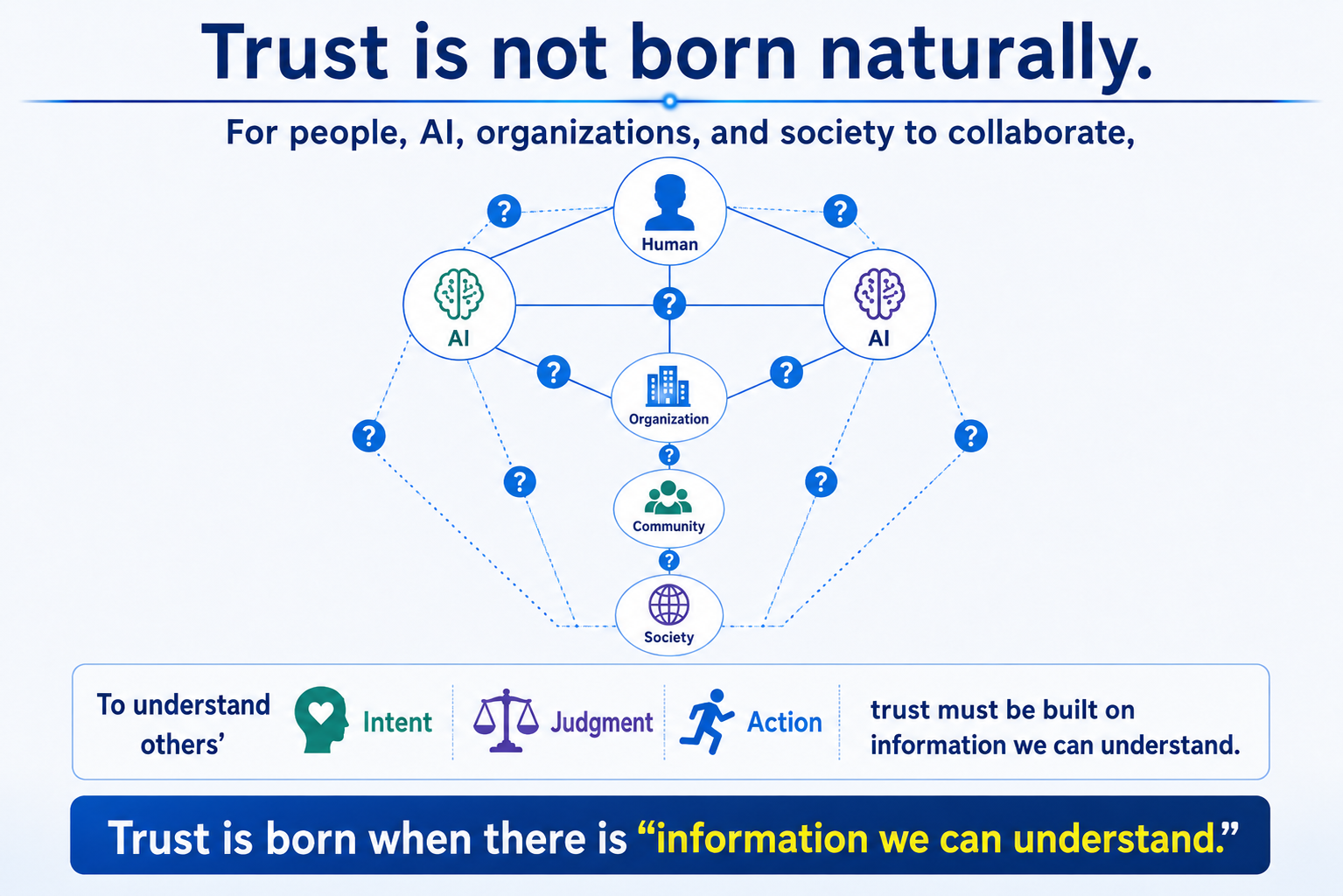
When answers exist in abundance, the decisive question changes shape. It is no longer “What is the answer?” but “What can we trust?”
The old loop is over. We no longer move from no information to search to find the answer. Answers now exist in abundance — generated faster than anyone can read them.
In a world of abundant, machine-generated information, the decisive question is no longer:
What information is correct?
It becomes:
What can we trust?
Deepfakes, AI-written articles, and bots that insist “this is the truth — believe me” all arrive at the same cost as anything else. The more information we have, the harder it becomes to tell what is real.
So the question shifts again — from a property of statements to a property of actors:
No longer “What is true?” — but “Who can we trust?”
This is the first turning point of the AI era.
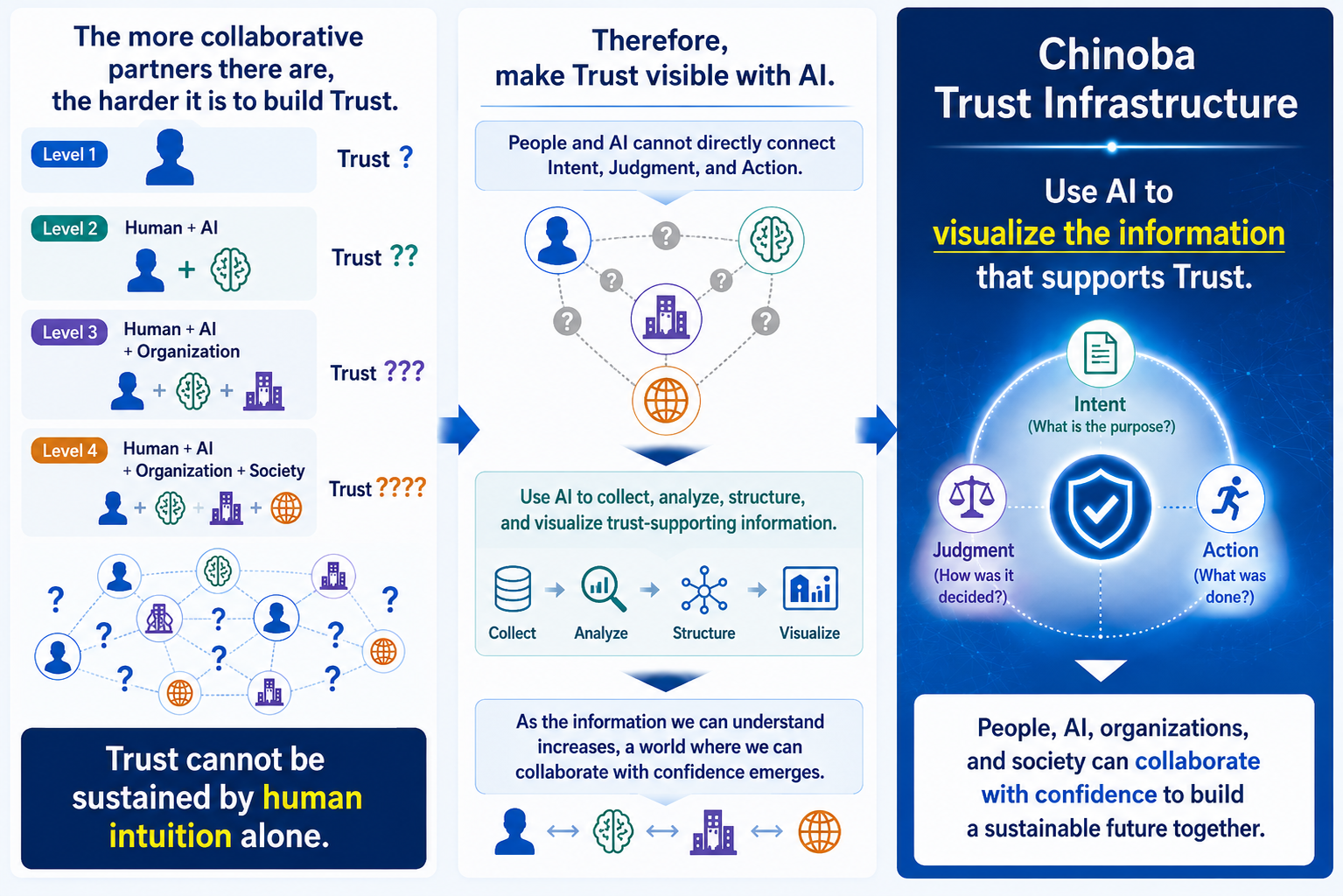
When anything can be generated, the scarce resource is no longer information. It is trust — and the structures that let trust scale.
Trust sits between knowing what is true and being able to act together. Truth alone settles nothing if no one can decide whom to rely on; the chain runs from truth, through trust, to coordination.
Who can I trust? — How do we coordinate?
Correctness is a property of statements. Trust is a property of relationships — and relationships are what coordination runs on. As AI systems recommend, coordinate, summarize, and produce at a scale no human can verify, the question of trust stops being optional.
The real problem of the AI era is not a lack of information. It is that, as information rises and trust falls, the cost of acting together climbs.
As information rises, trust tends to fall — and the cost of coordinating rises with it. The symptoms are familiar inside any organization:
More information produces more interpretations, more interpretations produce more conflict, and conflict drives coordination cost higher still. Everyone has data; no one agrees on what it means.
The more information we have, the more disorder is automatically generated.
Economics has long organized itself around transaction cost — the friction of exchange. But each society has worked to lower a different cost:
The infrastructure that supports the next society is not information, but trust and coordination.
Coordination cost is the effort spent simply getting actors to act together — meetings, emails, approvals, reviews, verifications, and endless adjustments. As the number of participants grows, this cost grows faster still.
People spend more time on coordination than on actual work.
Trust infrastructure absorbs that cost. Traces, reputation, boundaries, and accountability let actors rely on one another without re-deriving trust from scratch each time. Trust reduces the cost of coordination — and coordination is what the whole structure exists for.
If trust is the new scarce resource, we have to be precise about what it is. Not a feeling — but a prediction, an infrastructure, and ultimately a structure.
Trust is not affinity, and it is not “liking.” It is a future expectation — a social prediction that lets us act before we have certainty.
Trust → Coordination → Action
Its purpose is not warmth but capability: trust is the ability to make coordination possible.
Many people think trust means affinity, friendship, or emotion. But underneath, trust is a rational expectation about the future, formed from a history of behavior:
Will this person continue to meet expectations?
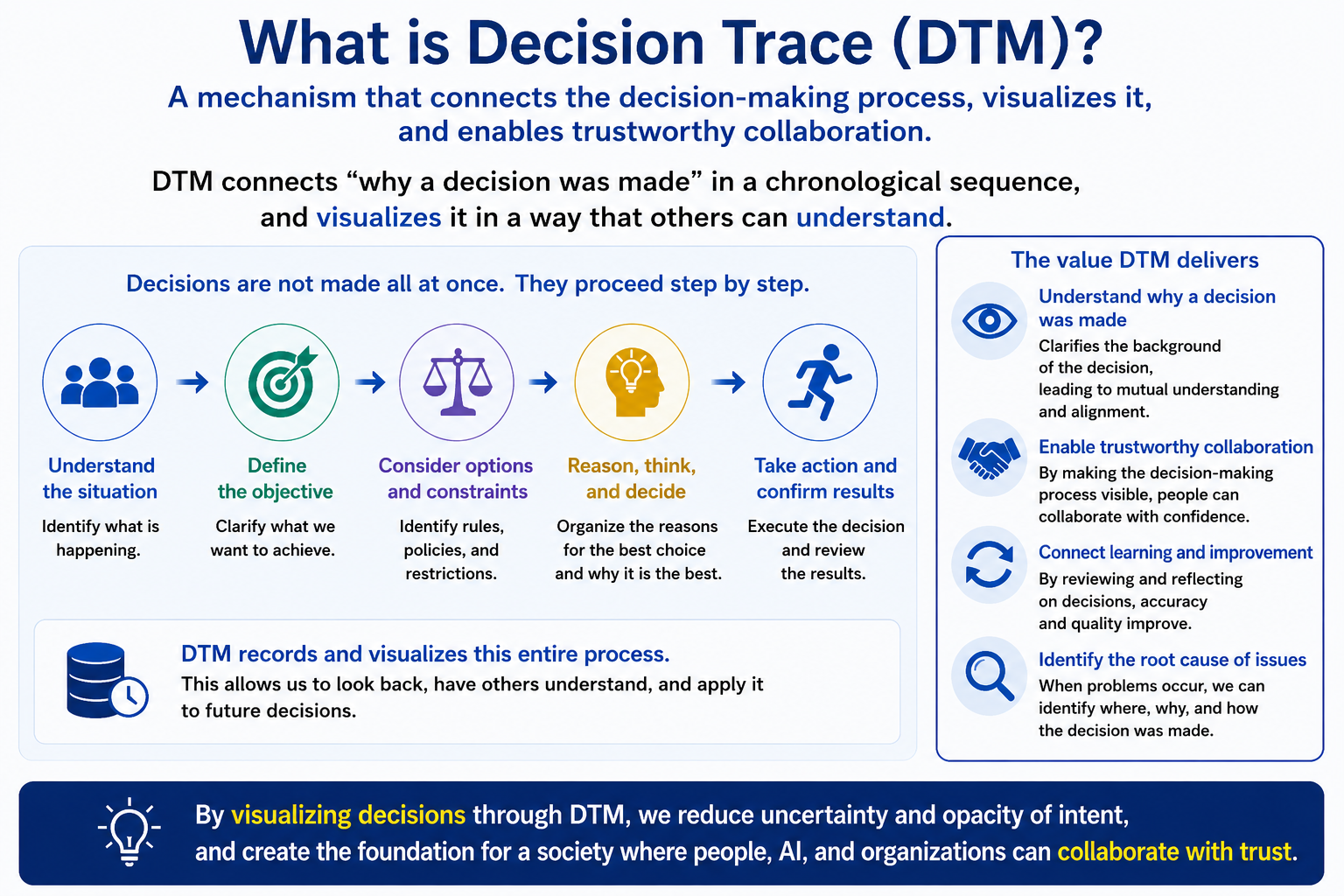
Past behavioral data feeds prediction, and prediction yields something like a trust score. This is why trust increasingly derives from accumulated decision history rather than authority — it is earned in traces, not granted by title.
Every society runs on a layer that connects, verifies, and enables collaboration. Communication society has TCP/IP; financial society has payment networks; logistics society has shipping networks.
For the AI society, that layer is trust infrastructure.
It is the substrate on which humans, AI systems, organizations, and institutions coordinate — wherever actors must rely on one another without full information.
Electricity, water, the internet, payments, logistics — we never consciously notice infrastructure. We only feel it when it fails, and then everything stops.
Trust is the same. When it holds, coordination feels effortless and invisible. When it breaks, society stops functioning. All activity rests on infrastructure we rarely see.
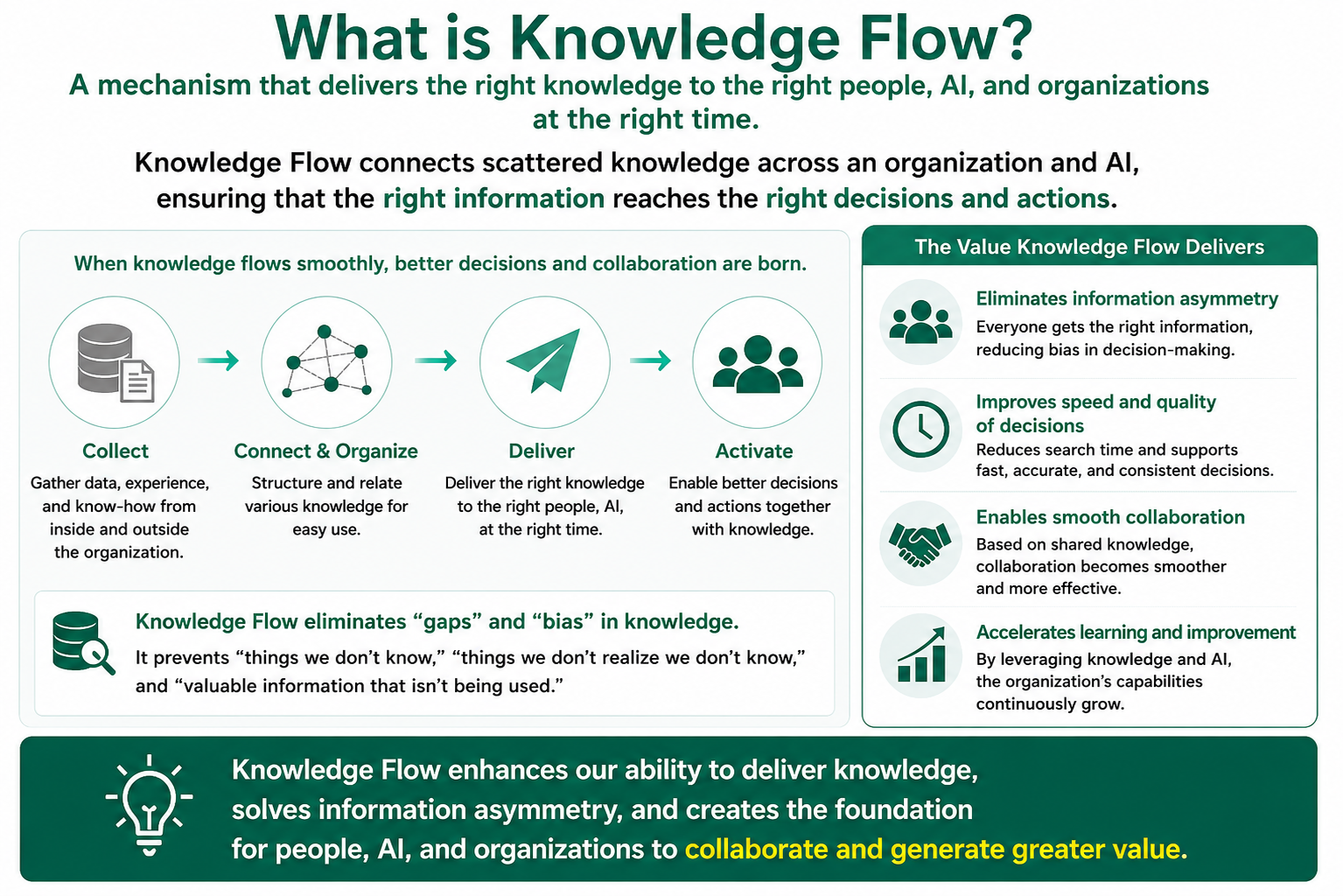
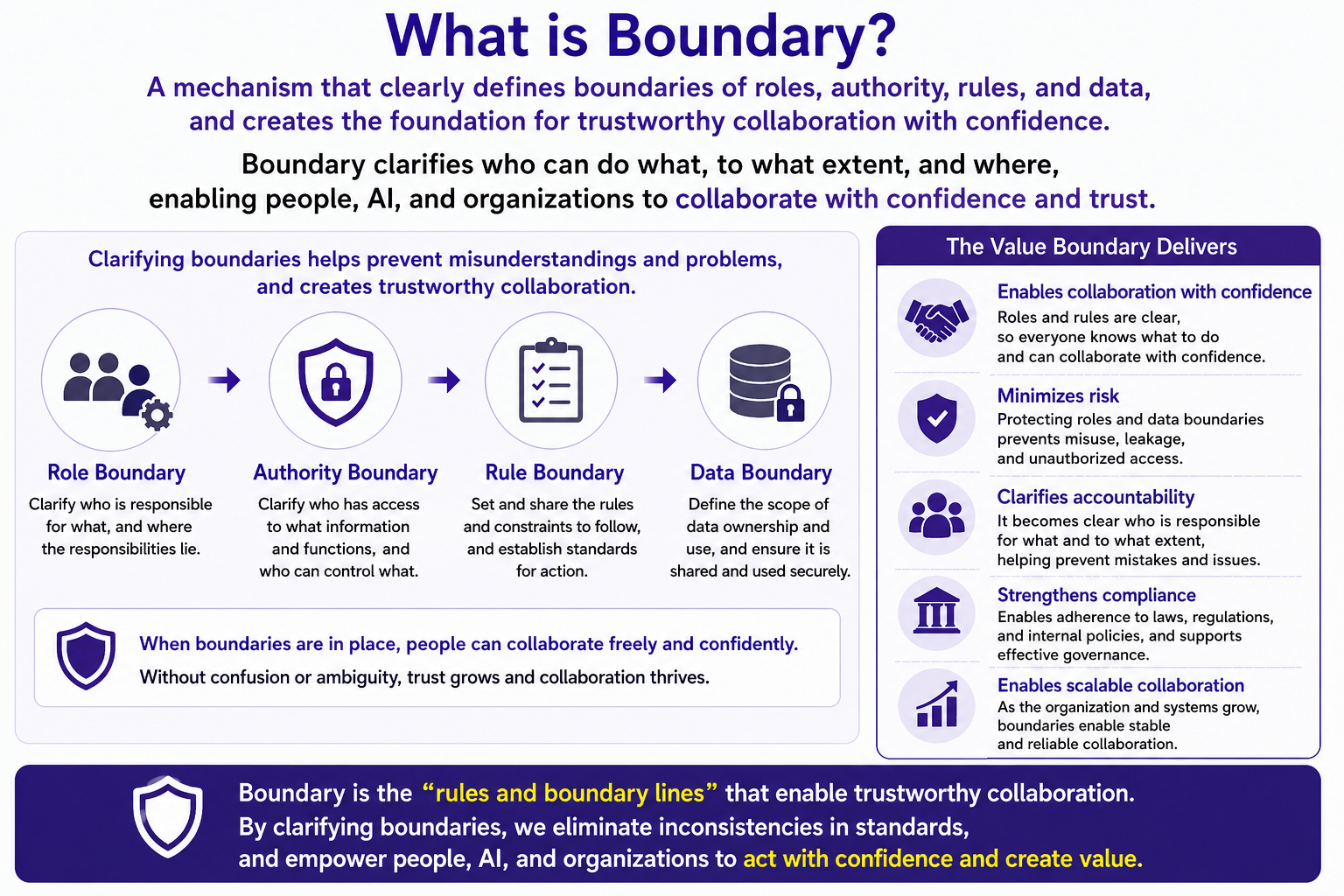
Trust infrastructure is not a single mechanism. It is composed of layers that together let many kinds of actor rely on one another:
These bind humans, AI systems, organizations, agents, and communities into a single fabric of trust.
Seen this way, each element of trust answers a distinct question:
In short, trust is a structure.
Future societies are not organized around a single intelligence or a single authority. They are populated by many participants, each able to decide and act — humans, human-plus-AI pairs, multi-agent systems, organizations, communities, and society itself.
As the number of actors grows, complexity grows exponentially: information is read differently, intentions are harder to predict, and the impact of failure expands. Because intelligence itself becomes distributed, trust must become distributed too.
The more actors there are, the less we can collaborate without trust.
When trust becomes infrastructure and coordination becomes possible, society itself begins to behave like a runtime — and intelligence reveals itself as something relational.
Societies have moved from information to knowledge to AI — and now toward a trust society, and beyond it a runtime society. Trust is where this transition meets the runtime layer of society itself: the standing structures through which a society continuously coordinates, decides, and acts.
When coordination becomes possible, society itself becomes a runtime.
Intelligence does not exist in isolation. Humans, AI, organizations, and communities each carry part of it, but it emerges between them — in the relationships, the interaction, and the shared context.
Diverse actors and their relationships generate creative insight, discovery, and value. This is why trust is best understood as a relationship rather than a possession — the same ground on which intelligence itself becomes relational.
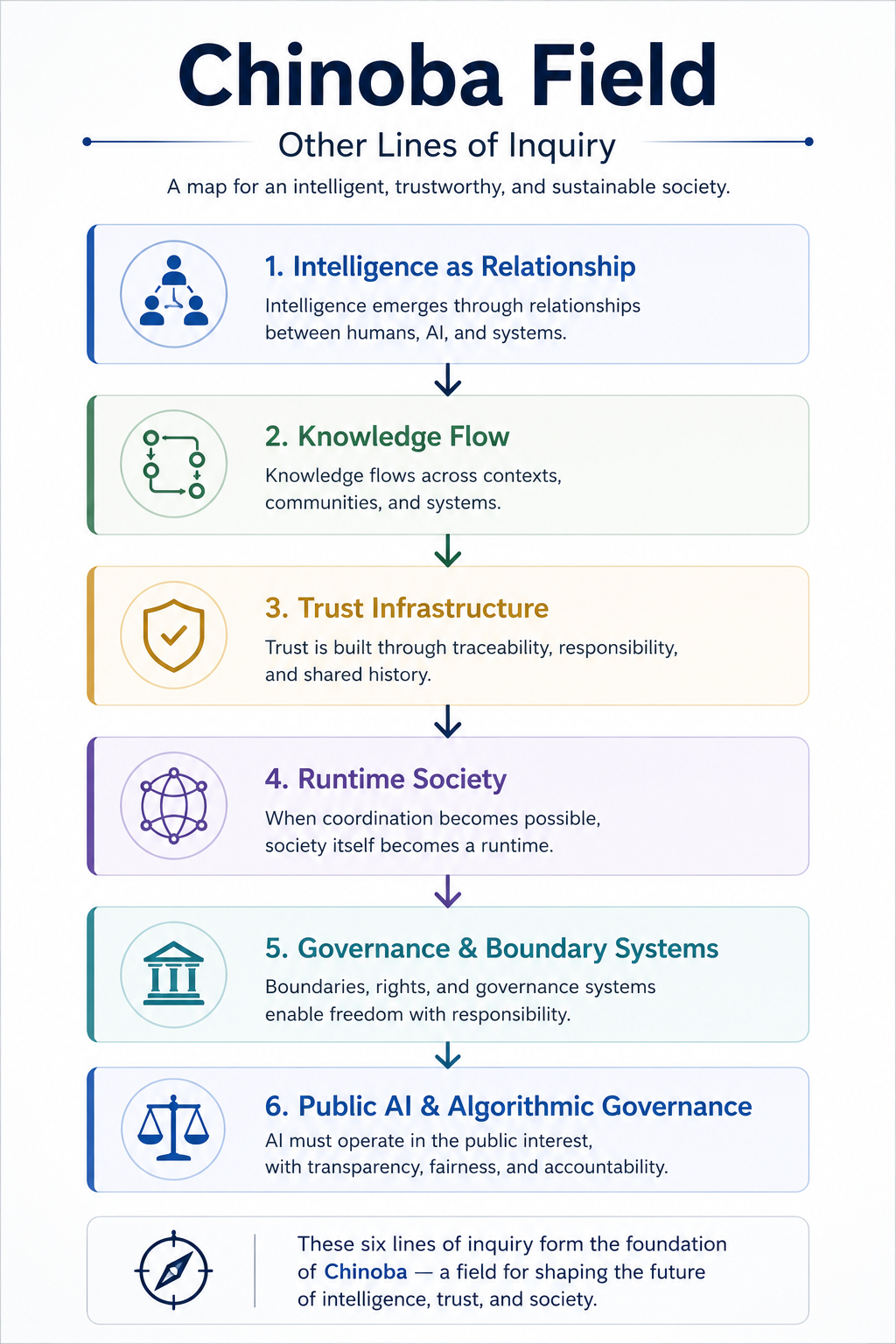
Trust is not produced by explanation alone. It emerges through accumulated traces, reputation, boundaries, human review, responsibility, and learning. In the age of AI, trust is no longer merely belief. It becomes an infrastructure that lets humans, agents, organizations, and institutions coordinate safely under uncertainty. Trust is not what we declare. It is what can be traced, challenged, reused, and accumulated. Trust emerges through relationships, responsibility, and shared history. Trust becomes infrastructure when coordination becomes possible. And when coordination becomes possible, society itself becomes a runtime.
Essays that extend this inquiry into traceable trust, the reputation economy, trust graphs, distributed trust, and the coordination cost of AI-enabled societies.
How traceable trust, reputation ledgers, trust graphs, and decision traces may become the foundation of AI-era social infrastructure.
How trace-based trust evaluation and GNN-based trust scoring may work together inside future trust infrastructures.
How immutable runtime structures, runtime integrity, traceability, rollback safety, and tamper-resistant execution environments may become foundational to trustworthy AI-era systems.
How trust shifts from authority to accumulated decision history — and what changes when it does.
How value migrates from products and prices toward decision, responsibility, and correction history.
Reputation as accumulated trace — durable, portable, and inspectable across organizations and institutions.
Trust as a relational network of humans, AI systems, organizations, and communities.
How trust moves from central institutions to traces, ledgers, reputation, and consensus.
Why trust infrastructure is, at bottom, an infrastructure for safe coordination under uncertainty.
How decision traces become the basis for organizational and institutional trust.
Why failures should become reusable knowledge inside trustworthy systems and societies.
How traces, reviews, and reputation become the basis on which institutions answer for what they do.
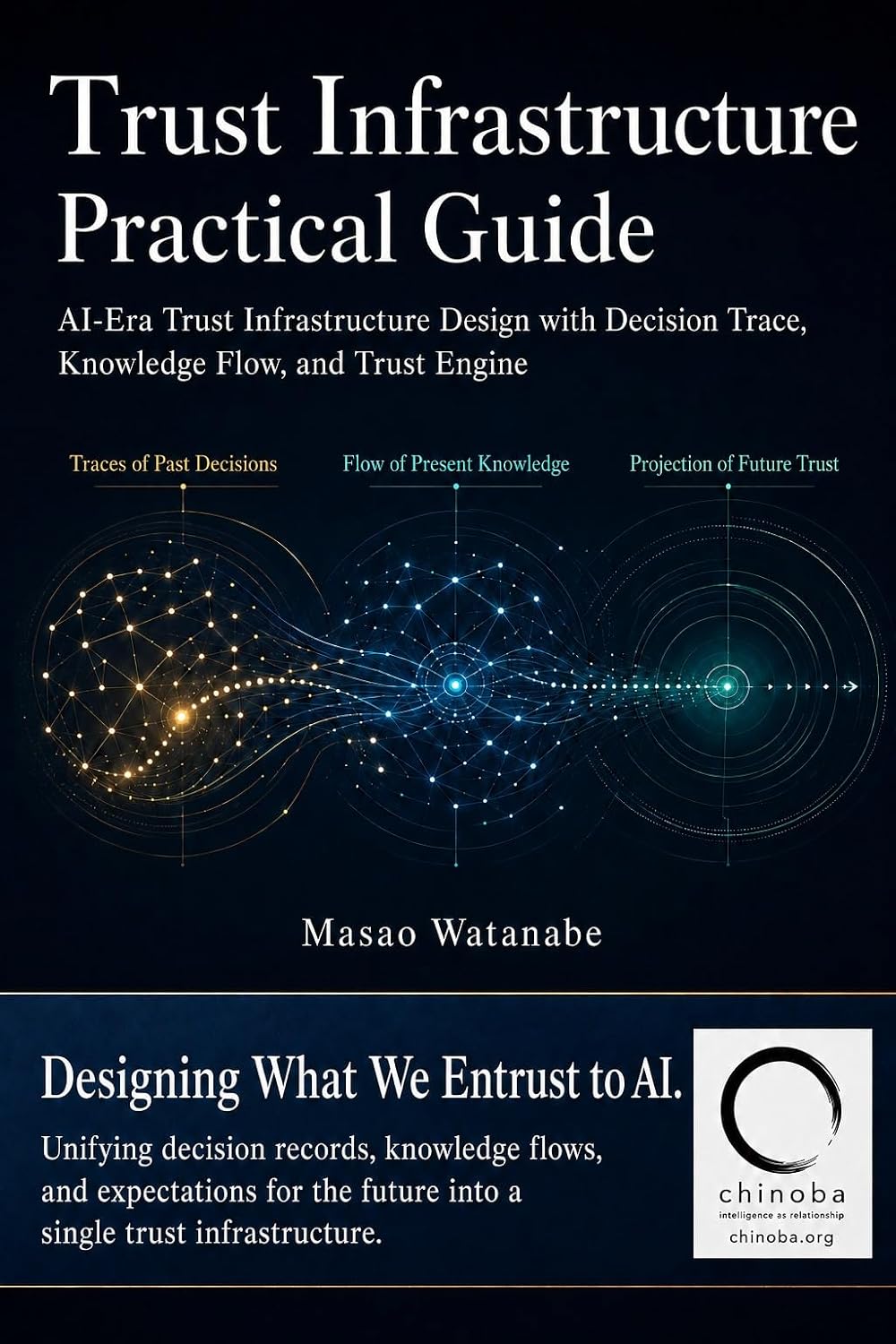
Knowledge artifacts that compile the surrounding research into structured volumes. English editions shown here.
An exploration of trust, reputation, verification, and coordination as the foundation of AI-era society.
Available on Kindle →AI時代における信頼・評判・検証・協調の基盤構造を解説する一冊。
Available on Kindle →A frame for treating AI as a decision system — the substrate from which traceable, auditable trust can be built.
Available on Kindle →A foundational text on relational intelligence — the conceptual ground from which trust as relationship and accountability inherits its meaning.
Available on Kindle →A practical guide for engineers and architects building trace, audit, and ledger structures into trustworthy AI systems.
Available on Kindle →Primitives for trust, coordination, traceability, reputation, and accountability.