Research / Runtime Society

Runtime Society

Runtime OS coordinates intelligence inside one system. Runtime Society coordinates it across many.

Runtime Society is the social extension of Runtime OS — the layer that emerges when many decision runtimes interconnect and begin sharing signals, boundaries, trust, and decision traces across AI, humans, organizations, and governance.

Explore This Theme

Enter Runtime Society through video and long-form texts — visual introductions and deeper explorations of Runtime OS, human-AI coordination, runtime governance, and the social operating system for the age of AI.

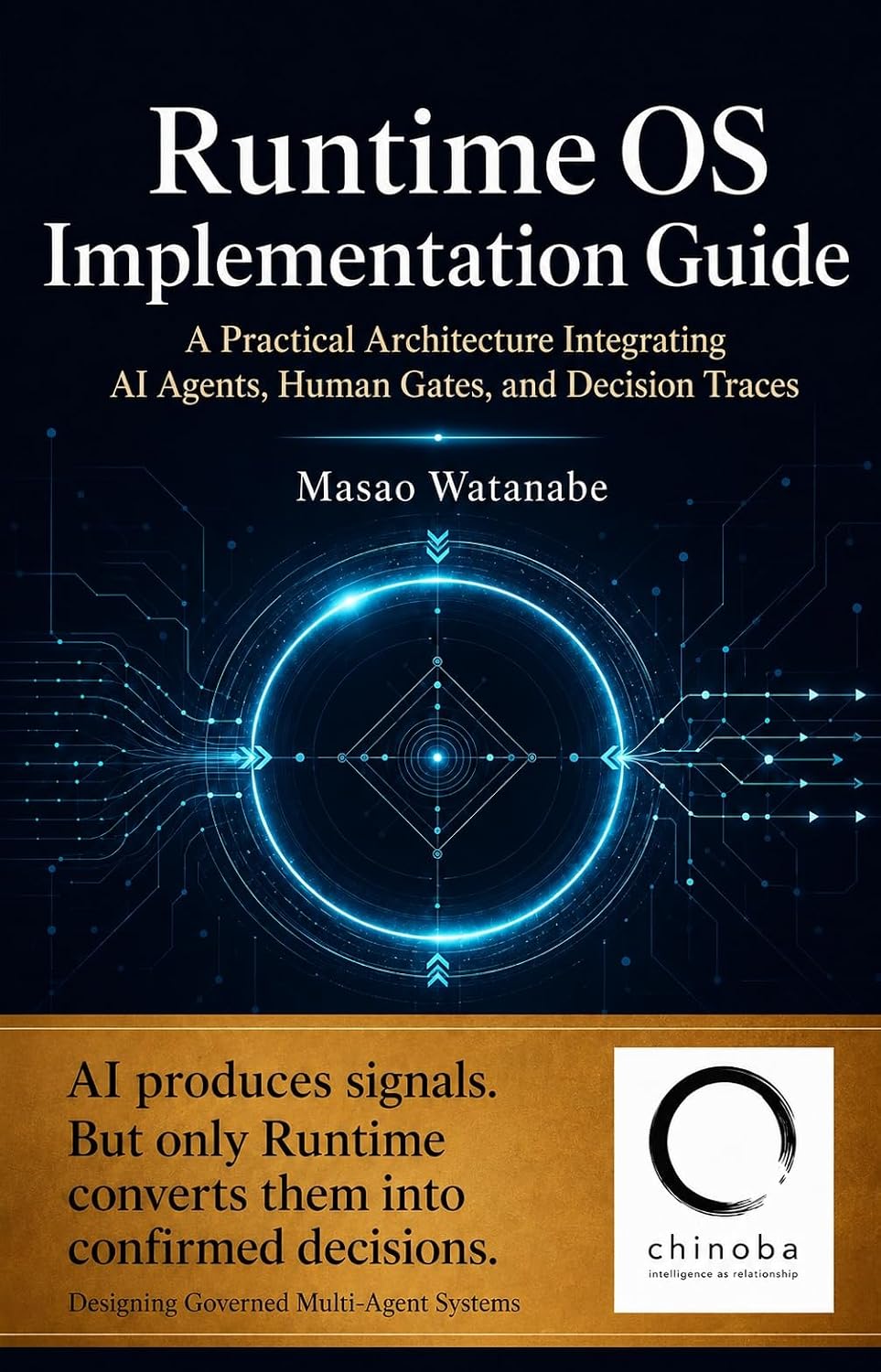
📚 Related Books

Long-form explorations of Runtime OS, Runtime Society, human-AI coordination, governance, and the social operating system for the AI era.

Overview

Runtime Society is what Runtime OS becomes once it leaves a single system. It studies how independent runtimes — each coordinating its own AI, humans, and boundaries — interconnect into shared social infrastructure.

The arc ahead: Runtime OS coordinates AI, humans, rules, and organizations within a single system through Event, Signal, State, Boundary, Decision, Coordination, Human Gate, Execution, and Trace; Runtime Society extends that coordination across organizations, regions, and nations; Intelligence Field is where collective intelligence emerges and endures.
The arc ahead — Runtime OS → Runtime Society → Intelligence Field

From Runtime OS to Runtime Society

Runtime OS is the runtime architecture within a single AI-enabled system — the execution layer inside one organization's boundary that observes signals, applies boundaries, escalates to humans, and records traces.

Runtime Society is what happens between systems — how many Runtime OS instances, run by different organizations and institutions under different rules, interact across society. It does not replace the single-system runtime; it connects them by sharing:

  • signals
  • boundaries
  • trust
  • decision traces
  • coordination state

The future of AI is not one giant model, nor one giant runtime. It is a world of interconnected Runtime OS instances.

The Socialization of Operating Systems

Operating systems have always existed to coordinate competing actors safely. What they manage has widened with each generation — from computation, to physical control, to decision-making itself.

Desktop OS managed computation. Embedded OS managed real-world control. Runtime OS manages decision coordination. Runtime Society extends the operating target to intelligence, organizations, and society itself.

Runtime OS brought this coordination to a single AI-enabled system. Runtime Society is its socialization — the point at which the managed substrate is no longer one machine, or one runtime, but coordinated intelligence across organizations and institutions.

Why It Matters

AI is moving from generating information to executing decisions in the real world — and no intelligent system executes alone. Coordination, not raw capability, becomes the binding constraint.

AI is no longer just a chatbot: it calls APIs, executes workflows, coordinates with agents, and operates external systems — evolving from an information generator into an execution system.
From information generation to execution

AI Does Not Operate Alone

As AI enters agents, multi-agent systems, autonomous workflows, and organizational operations, it must coordinate with humans, organizations, laws, safety standards, business workflows, external systems, and other AI.

Multiple intelligent systems already coexist — each under different rules, permissions, responsibilities, and runtimes:

  • industrial AI
  • medical AI
  • logistics AI
  • government AI
  • personal agents
  • enterprise agents

The decisive question is not whether one model is intelligent, but whether these runtimes can coordinate.

Coordinating Intelligence, Not Just Building It

The challenge of the AI era is not making models smarter. It is making intelligence safely executable across boundaries. Inside a single Runtime OS, that work reduces to one loop:

# the loop inside a single Runtime OS while true: signal = observe() decision = runtime(signal) if boundary_ok(decision): execute() else: escalate_to_human() trace()

Runtime Society is what happens when this loop must run across many such systems at once. The open questions are no longer internal — they are coordination questions between runtimes:

How is a Signal interpreted? How far may automation proceed? Where do Human Gates intervene? Which runtime receives Escalation? Which Traces require audit?

Core Structure

Runtime Society extends the lineage of distributed systems. Each generation shared a different layer — and Runtime Society shares the layer above legitimacy: meaning-aware coordination between many Runtime OS instances.

i

Internet — Shared Communication

Independent computers kept their autonomy but agreed on protocols — TCP/IP, addressing, routing. Connection without centralization.

ii

Cloud / Kubernetes — Shared Execution State

Coordination moved from connection to execution: workloads, service discovery, policy, and orchestration state shared across nodes.

iii

Web3 — Shared Legitimacy

Participants share ledgers, consensus, and transaction history — agreeing on what is valid without a central authority.

iv

Runtime Society — Shared Coordination

Many Runtime OS instances share meaning-aware execution state. The primitives inside each runtime — signals, boundaries, trust, traces — become the common layer between systems.

The Runtime OS execution architecture as a nine-stage loop within a single system: Event, Signal, State, Boundary, Decision, Coordination, Human Gate, Execution, and Trace — the foundation for autonomous operations that connect the real world and AI through trustworthy, reliable, and accountable outcomes.
Runtime OS — the execution architecture within a single system
Shared Layers · Abstractions of the Runtime OS Architecture

What Runtime Society Shares

These layers are not new mechanisms that replace Runtime OS. Each is the shared abstraction of a primitive that already exists inside a single Runtime OS — lifted to the level where independent runtimes can exchange and coordinate it. Runtime Society is the inter-runtime projection of the same execution architecture.

  1. L1 Signal Inside a Runtime OS, the observed input to the decision loop. Shared, it lets one runtime's observations become legible to others — an observation, not yet a decision. signal
  2. L2 Boundary Inside a Runtime OS, the limit beyond which autonomous execution should not proceed. Shared, boundaries that differ across runtimes can be reconciled — and escalation routed to the right authority. boundary
  3. L3 Trust Inside a Runtime OS, how much authority a component is granted. Shared, it answers the cross-runtime question: not "is it intelligent?" but "how far can another runtime safely be entrusted?" trust
  4. L4 Decision Trace Inside a Runtime OS, the record of how a response emerged. Shared, traces become jointly auditable across organizations — the memory of learnable, cross-runtime coordination. trace
  5. L5 Coordination State No single Runtime OS holds this. It is the layer Runtime Society adds — the live, shared state of how many runtimes, agents, humans, and organizations are interacting now. coordination

Reading Around Runtime Society

Essays that trace the path from Runtime OS to Runtime Society — how operating systems evolve into coordination runtimes, and how those runtimes interconnect into shared social infrastructure.

Runtime Society

What Is Runtime Society? — Toward the Socialization of Operating Systems and the Era of Meaning-Aware Coordinated Execution —

An exploration of Runtime Society as the next evolution of distributed systems — extending beyond communication, execution, and legitimacy toward meaning-aware coordinated execution across AI, humans, organizations, governance, boundaries, trust, and runtime collaboration.

Available Now
Operating System Evolution

Where Are Operating Systems Heading? — The Evolution of Desktop OS, Embedded OS, and Runtime OS

An exploration of how operating systems evolved from desktop information-processing platforms to embedded real-time control systems, and why AI-era systems are now moving toward Runtime OS architectures for coordinating intelligence, governance, boundaries, and decision execution.

Available Now
Minimal Runtime OS

Minimal Runtime OS Architecture and DTM — Learning from Desktop OS and Embedded OS Design

An exploration of the minimal architectural structure required for AI-era Runtime OS systems, comparing desktop operating systems, embedded operating systems, and Runtime OS design through the lens of Decision Trace Model (DTM), boundaries, human gates, and traceable decision execution.

Available Now
Runtime OS

Runtime OS — Why Operating Systems Are Becoming Important Again in the Age of AI

Why AI-era systems require a new kind of operating system — one that coordinates signals, decisions, boundaries, human oversight, runtime execution, and traceability across intelligent systems.

Available Now
Runtime Protocol

Runtime Protocol — Why AI Needs Decision OS Architecture

Why AI systems require runtime protocols, boundary control, human gates, decision traces, and governance structures beyond LLMs.

Available Now
Decision Structures

Why AI Needs Runtime-Based Decision Structures

An exploration of why AI systems need runtime-level decision coordination, boundaries, escalation, and traceability in real-world environments.

Available Now
Foundations

Runtime Society

A foundational essay on society as a runtime coordination system.

Coming Soon
Governance

Governance as Runtime Coordination

How governance may shift from static rule enforcement to adaptive coordination structures.

Coming Soon
Institutions

From Static Institutions to Adaptive Systems

Why institutions must become capable of feedback, traceability, and runtime adjustment.

Coming Soon
Future Infrastructure

Decision Runtime and the Future of Social Systems

How decision runtimes may become a foundation for future social infrastructure.

Coming Soon

Long-form Texts

Knowledge artifacts that compile the surrounding research into structured volumes. English editions shown here.

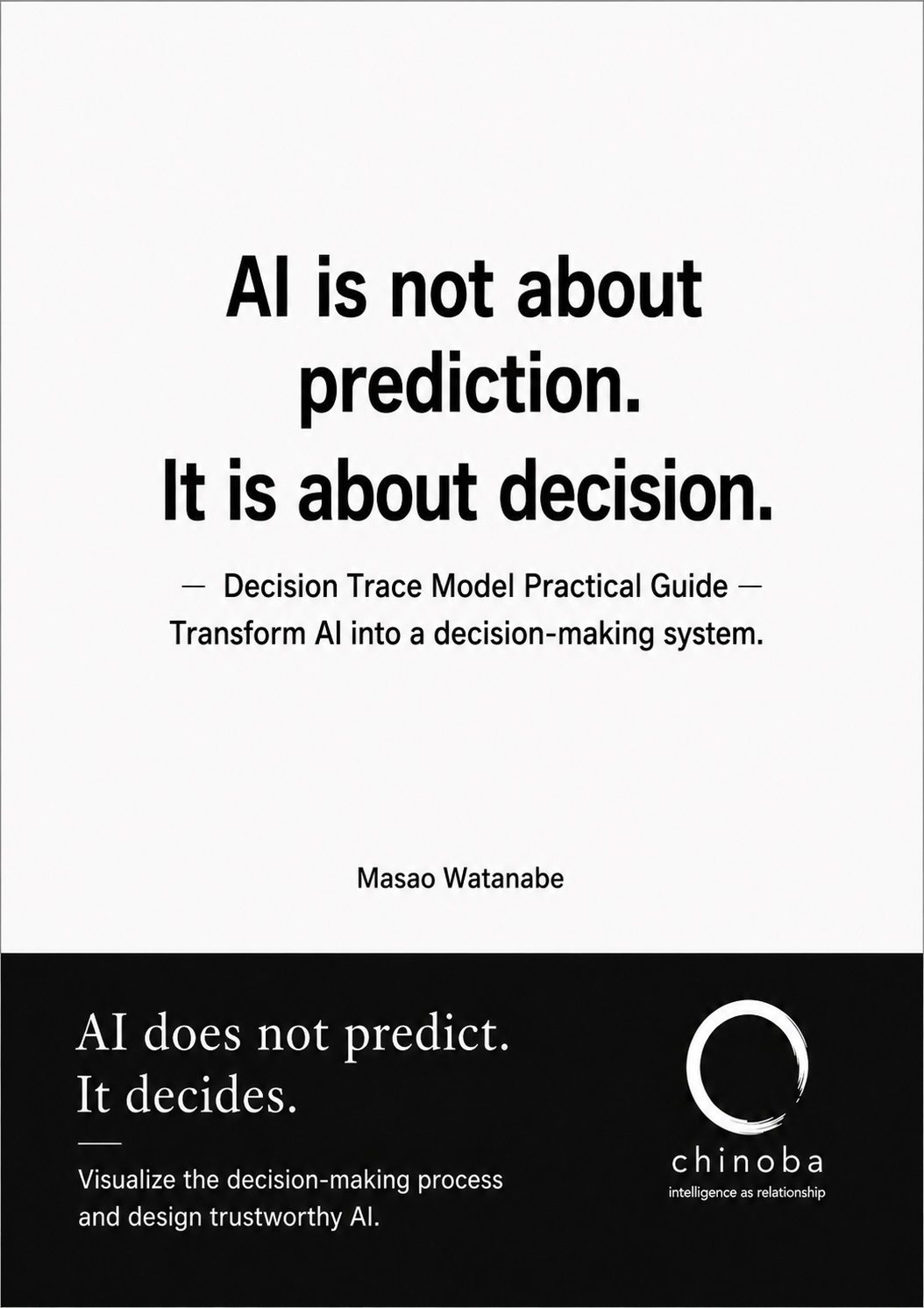
AI is not prediction. It is decision.
— Decision Trace Model —

The origin of the sequence: treating AI output as a signal, not a decision. Runtime Society inherits its traceable, boundary-aware decision flow and extends it across many runtimes.

Available on Kindle →
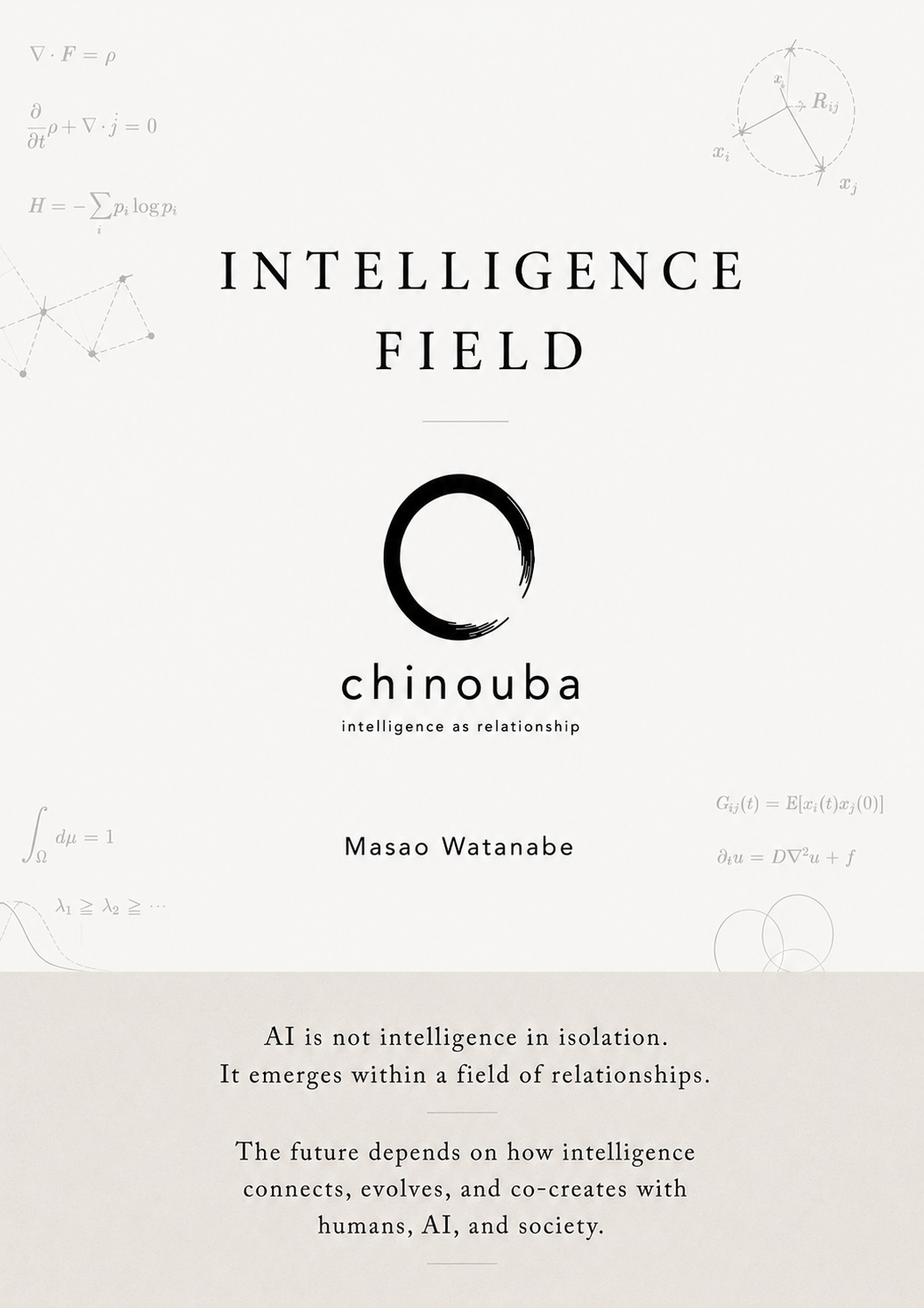
Intelligence as Relationship
— Intelligence Field —

The downstream horizon of the sequence: once runtimes coordinate at social scale, intelligence emerges as a relational field rather than as any single system.

Available on Kindle →
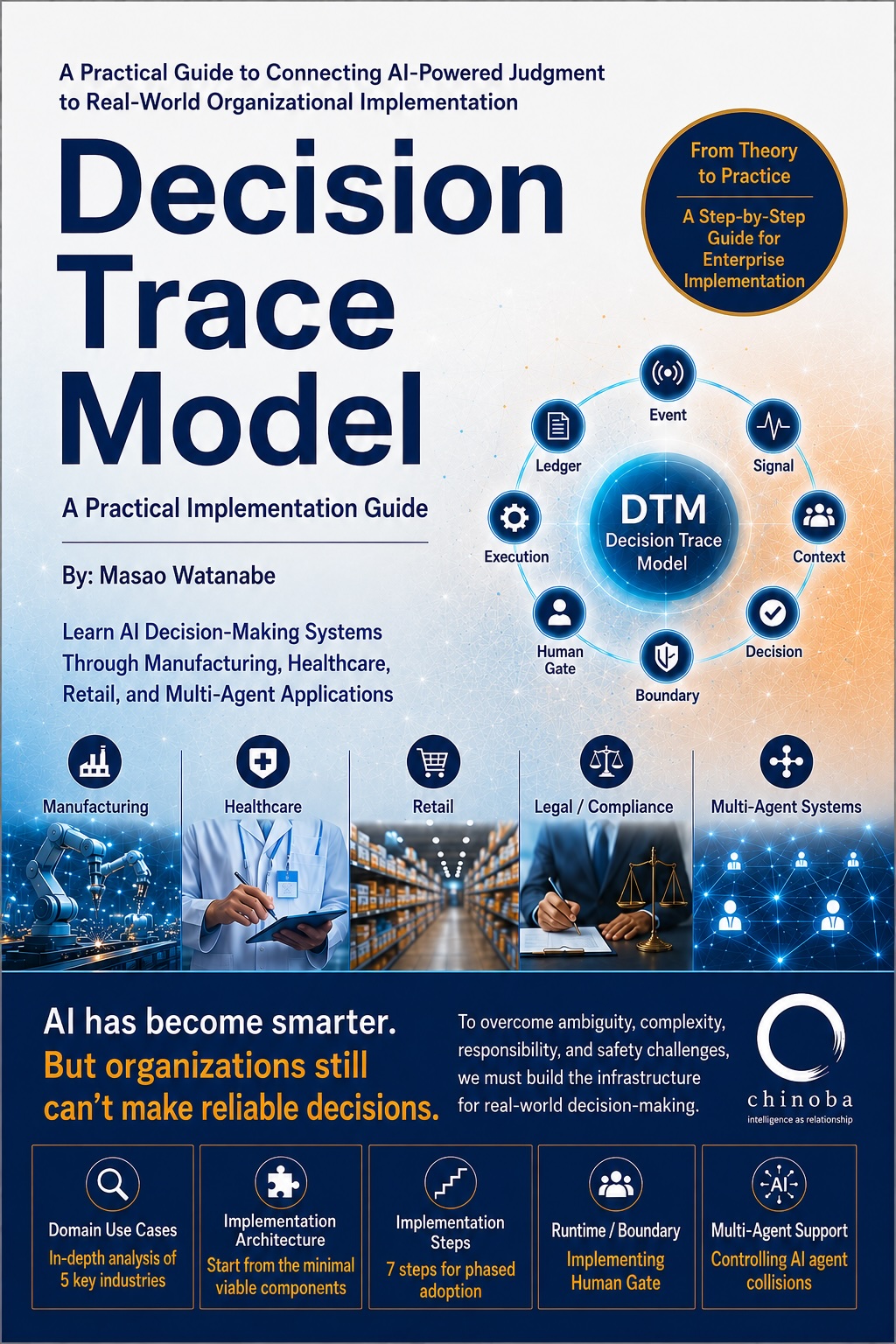
Decision Trace Model Practical Guide
— Designing AI as a Decision System —

A practical guide for engineers and architects building decision systems on top of traceable, boundary-aware runtime structures.

Available on Kindle →

Related OSS

Runtime and trace-based components for adaptive decision systems, governance, and institutional coordination.

Runtime components for social coordination

The OSS ecosystem provides primitives that map onto the shared layers of Runtime Society: decision runtimes, signal routing, boundary and escalation structures, trust and traceable decision records, ledgered memory, and view layers for inspecting coordination state across runtimes, agents, and humans. Because runtime becomes social decision infrastructure, it must stay open, auditable, and reproducible.

GitHub — chinoba-lab →
  • decision-runtime-core
  • decision-trace-model-v2
  • ledger-core-k2
  • interaction-core-v2
  • view-core-v2
  • decision-trace-gnn
  • Synapse-Insights

Architecture Archive

A reference set of the core runtime mechanisms named throughout this inquiry — the boundary, human gate, decision trace, and coordination structures that exist inside a single Runtime OS and become shared layers across Runtime Society.

Diagram 01

Boundary

Boundary — the legal, safety, ethical, authority, and organizational limits that AI must never cross; protecting boundaries is the foundation of trustworthy AI.
Diagram 02

Human Gate

Human Gate — AI does not execute everything automatically; high-risk judgments are routed to human verification and approval before execution, keeping the final decision with people.
Diagram 03

Decision Trace

Decision Trace — a sequential record of every decision capturing why, who, when, and the result, providing the foundation for transparency, accountability, and continuous improvement.
Diagram 04

Coordination

Coordination — the runtime connects multiple agents, humans, and rules into a coordinated whole with integration and shared purpose.

Closing Statement

A Runtime OS coordinates one system. Runtime Society coordinates many — the socialization of the operating system. Where earlier systems shared communication, execution, and legitimacy, Runtime Society shares meaning-aware coordinated execution across AI, humans, organizations, and governance.
Chinoba.org