Research / Decision Trace Model

Decision Trace Model

AI is not prediction. It is decision.

A framework for separating AI-generated signals from organizational decisions — making judgment traceable, auditable, and governable.

Explore This Theme

Enter the world of Decision Trace Model through books and videos — practical introductions to AI decision systems, organizational governance, Decision Trace, and real-world implementation.

Signal is not Decision

DTM is a framework for handling decision-making in environments where AI, humans, organizations, and external systems interact under uncertainty.

Modern AI systems are extremely powerful at generating signals — predictions, classifications, recommendations, generated content, retrieved knowledge.

But real-world organizations do not operate on signals alone. They must decide what action to take, who is responsible, where escalation is required, what safety boundaries exist, when humans must intervene, and how decisions can later be audited.

Signal ≠ Decision

The core idea is that AI output should not directly become organizational action. Decisions emerge through a runtime structure involving context formation, boundary evaluation, human gates, coordination, traceability, and execution control.

Why It Matters

As AI becomes more autonomous and agentic, organizations face a growing problem: AI can generate answers, but organizations still struggle to decide safely.

Real-world problems contain ambiguity, weak signals, conflicting historical cases, incomplete information, organizational constraints, legal boundaries, and safety requirements. Traditional AI architectures focus on Input → Model → Output. DTM introduces the missing decision layer between AI generation and organizational action.
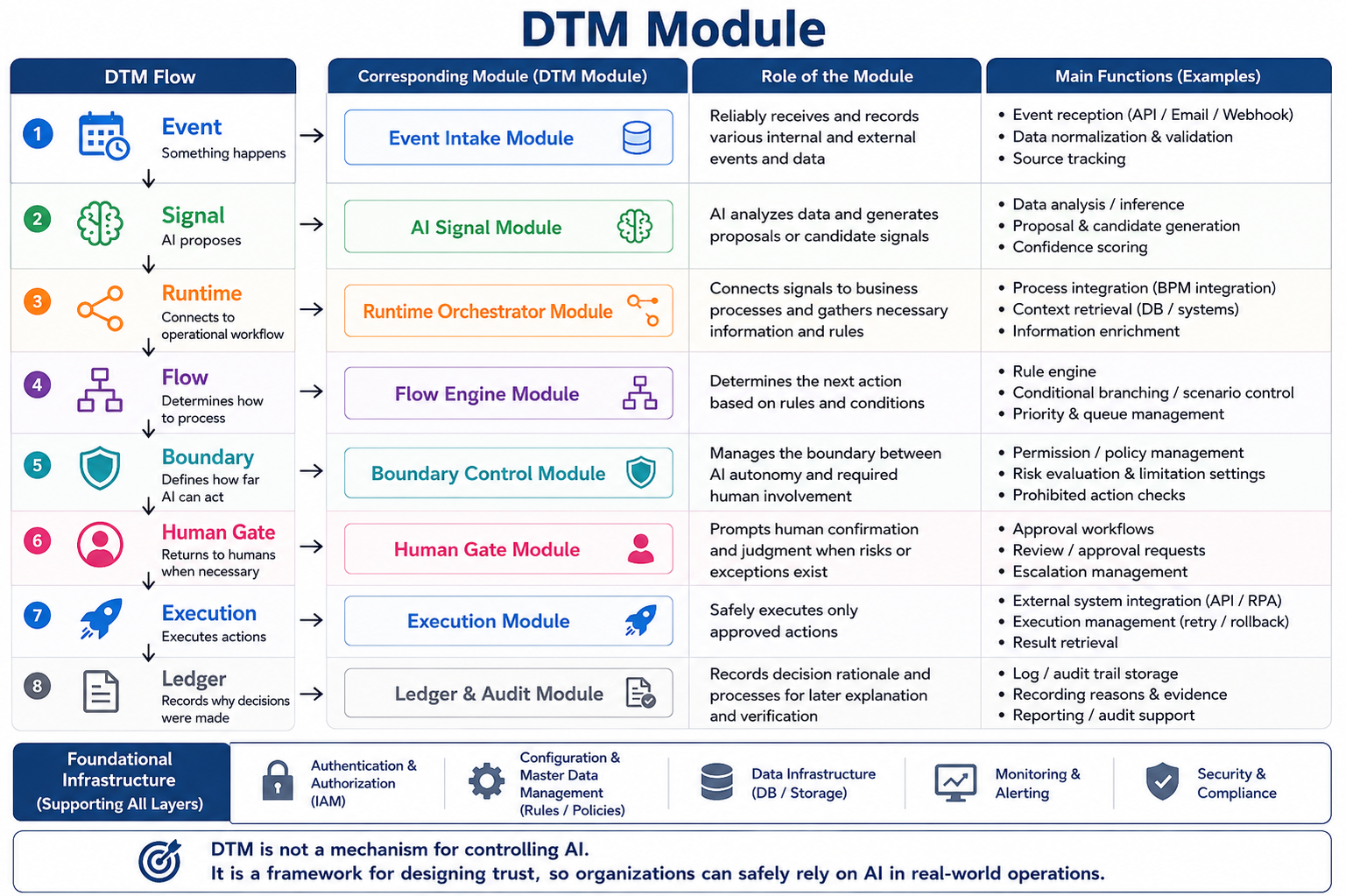
Decision Trace Model — module diagram
Fig. 01 — DTM Module Architecture

Decision Runtime as a Layer

DTM treats decision-making itself as a first-class architectural layer — assembled from five primitives that separate signal generation from organizational action.

i

Signal

AI-generated outputs — predictions, anomalies, recommendations, generated text, similarity results. Informative, but not authoritative.

ii

Runtime

The central orchestration layer. Evaluates signals, forms context, checks boundaries, coordinates agents, records traces. A Decision OS.

iii

Boundary

Safety limits, escalation rules, operational constraints, governance conditions. Boundaries prevent unsafe automatic execution.

iv

Human Gate

Critical decisions require explicit human involvement. Human-in-the-loop is architectural, not optional.

v

Decision Trace

Every important decision remains traceable, explainable, auditable, reusable, learnable — forming organizational memory.

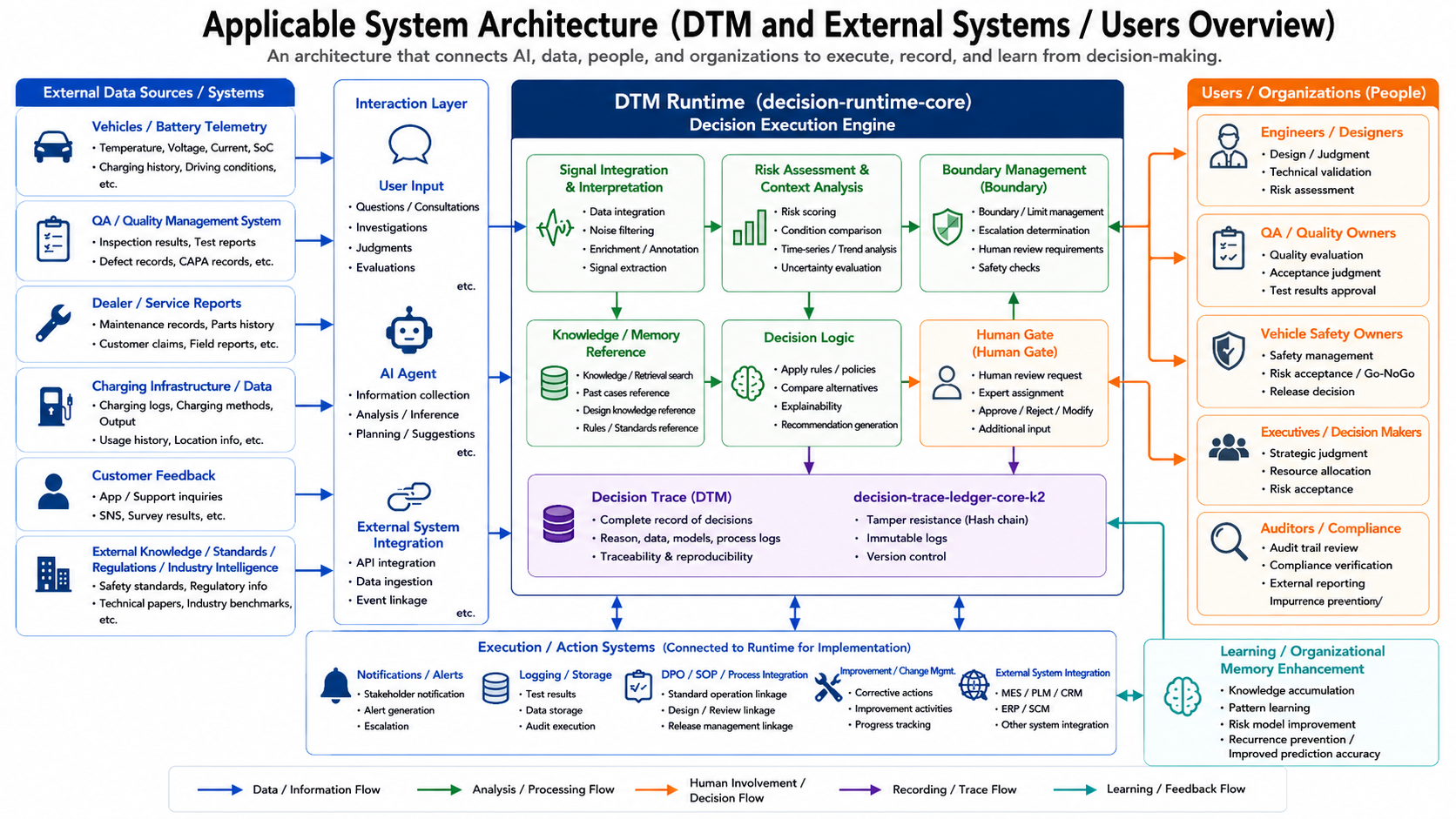
Applicable system architecture for manufacturing
Fig. 02 — Applicable System Architecture for Manufacturing

Open-Source Ecosystem

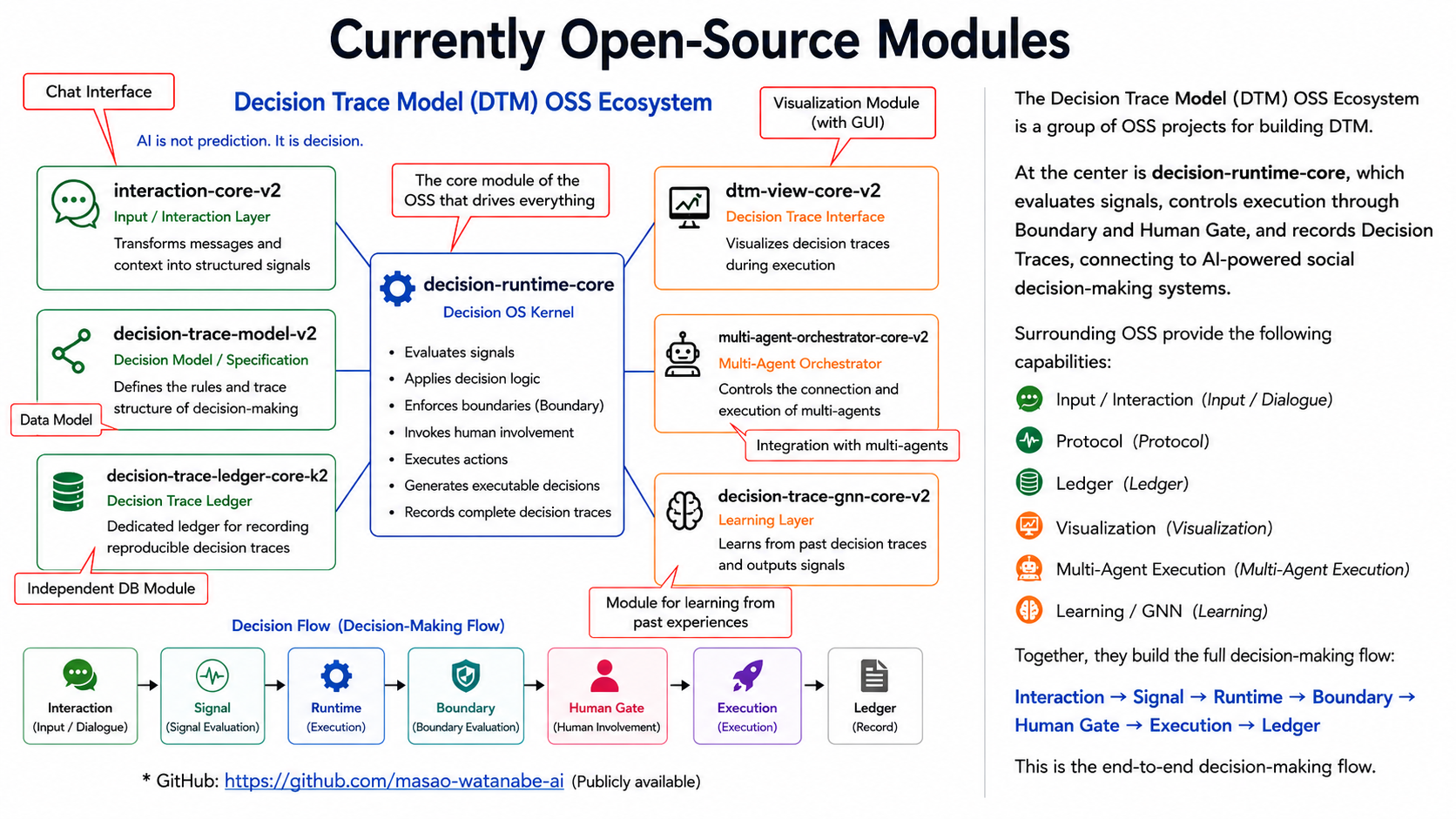
The DTM ecosystem consists of modular OSS components for runtime-based decision systems.

DTM OSS module map
Fig. 03 — OSS Module Map

Modular components

Each module addresses a single concern within the decision runtime — execution, trace, interaction, view, ledger, organizational memory.

GitHub — chinoba-lab →
  • decision-runtime-core
  • decision-trace-model-v2
  • interaction-core-v2
  • ledger-core-k2
  • view-core-v2
  • Synapse-Insights
  • decision-trace-gnn

Event → Trace

A decision is not a single moment. It is a traversal across distinct stages — each leaving a structured record.

  1. 01 Event

    Something happens in the world that the system observes.

  2. 02 Signal

    AI generates an interpretation — prediction, anomaly, suggestion.

  3. 03 Decision

    The runtime forms context and considers what action is appropriate.

  4. 04 Boundary

    Safety limits, escalation rules, and governance conditions are checked.

  5. 05 Human Gate

    When ambiguity exceeds threshold, a human enters the loop.

  6. 06 Execution

    The decision is enacted — by a system, agent, or person.

  7. 07 Trace

    The full path becomes an artifact — auditable, replayable, learnable.

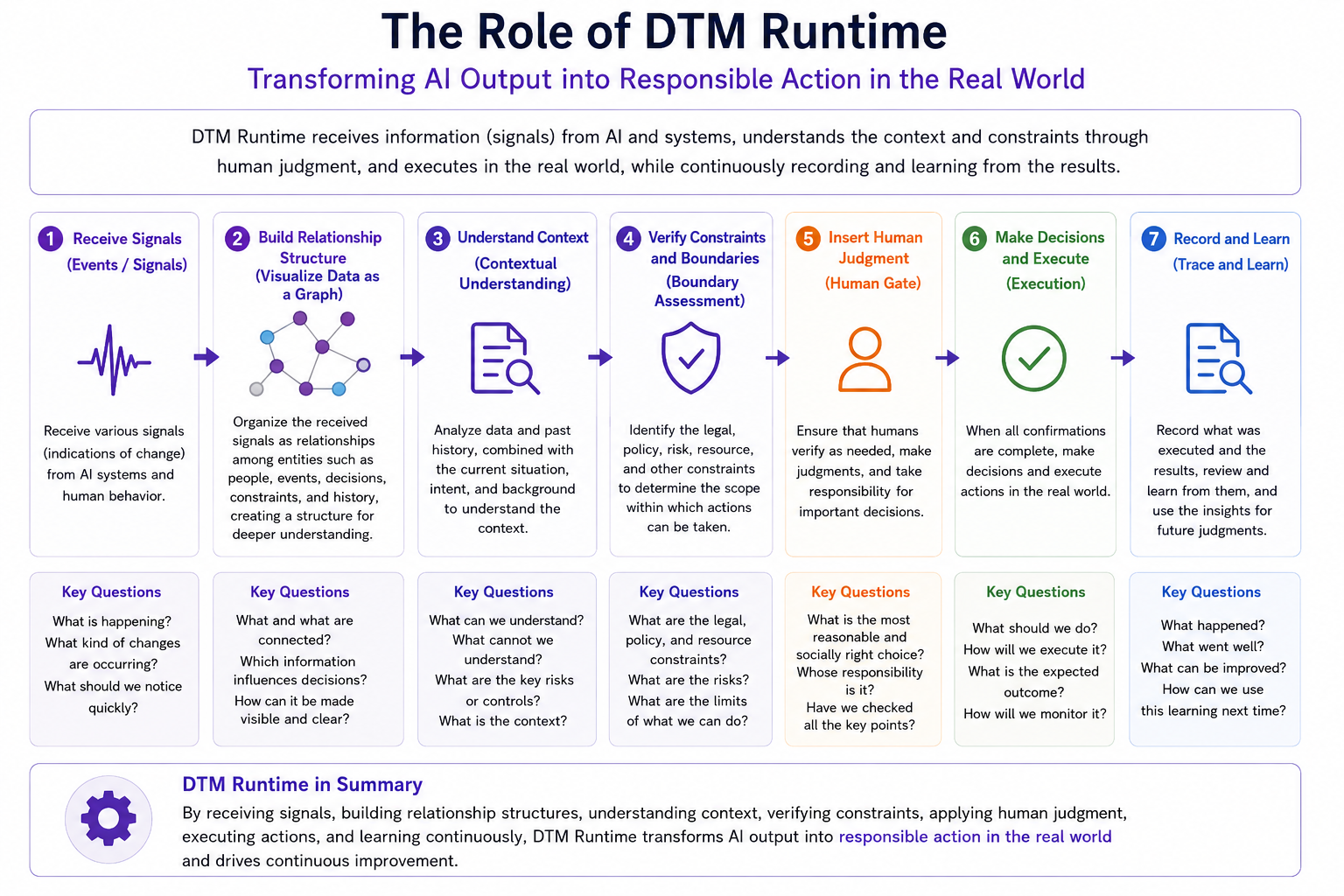
The Role of DTM Runtime

How AI-generated signals become safe and accountable real-world decisions.

DTM Runtime is the execution and coordination layer that transforms AI-generated signals into real-world organizational action.

Rather than allowing AI outputs to directly trigger execution, the runtime forms relationships between signals, context, constraints, history, organizational policies, and human judgment.

This creates a structured decision process involving:

  • Signal reception
  • Relationship graph formation
  • Context understanding
  • Boundary verification
  • Human gate evaluation
  • Execution control
  • Trace recording and learning

The result is not merely AI prediction, but traceable, governable, and accountable organizational decision-making.

The Role of DTM Runtime
Fig. 04 — The Role of DTM Runtime

Reading Around DTM

Essays that surround and extend the model — written in the same investigative line.

Long-form Texts

Knowledge artifacts that compile this line of inquiry into structured volumes. English editions shown here.

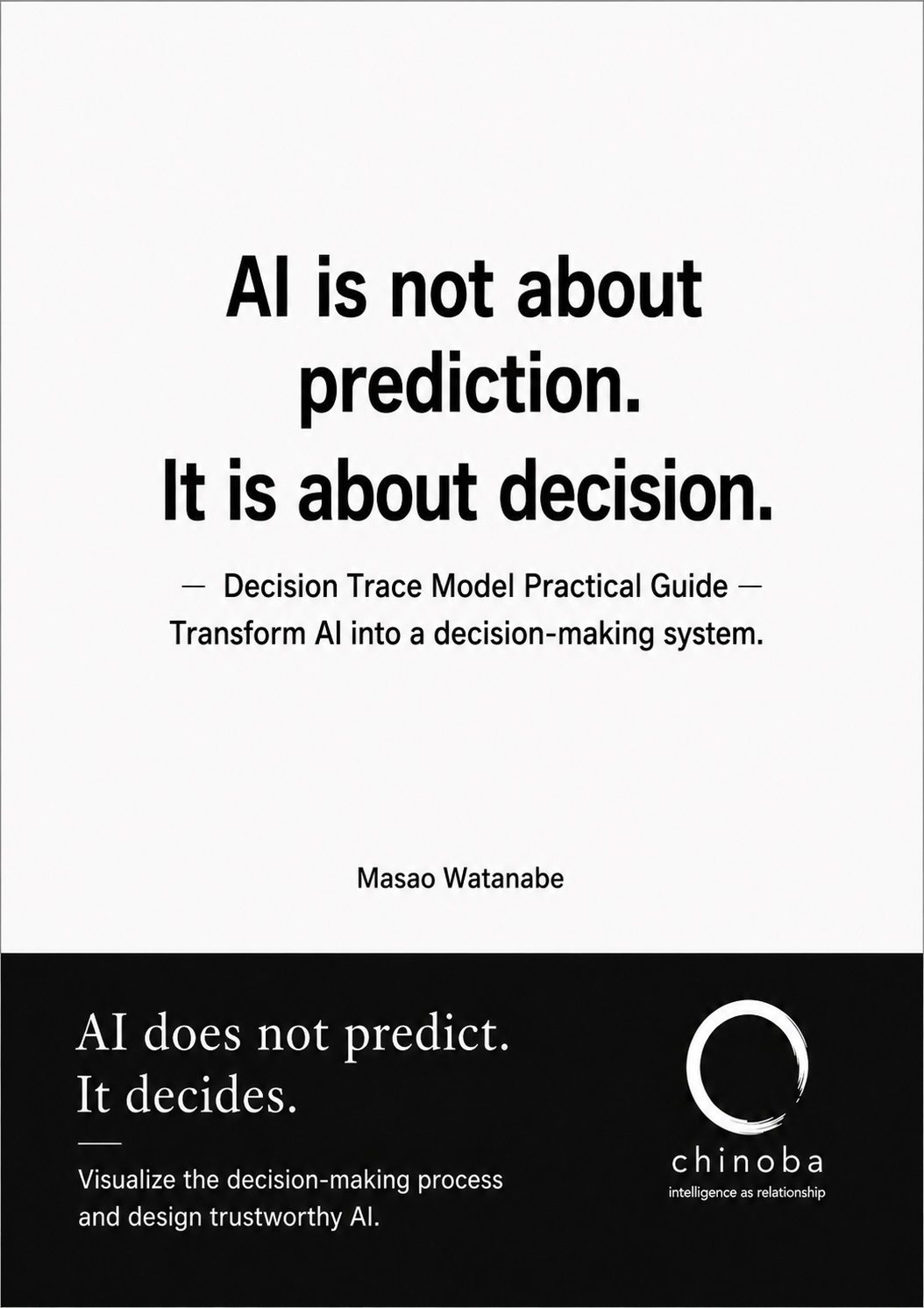
AI is not prediction. It is decision.
— Decision Trace Model Practical Guide —

A practical guide for designing AI as a decision system rather than a predictive output engine.

Available on Kindle →
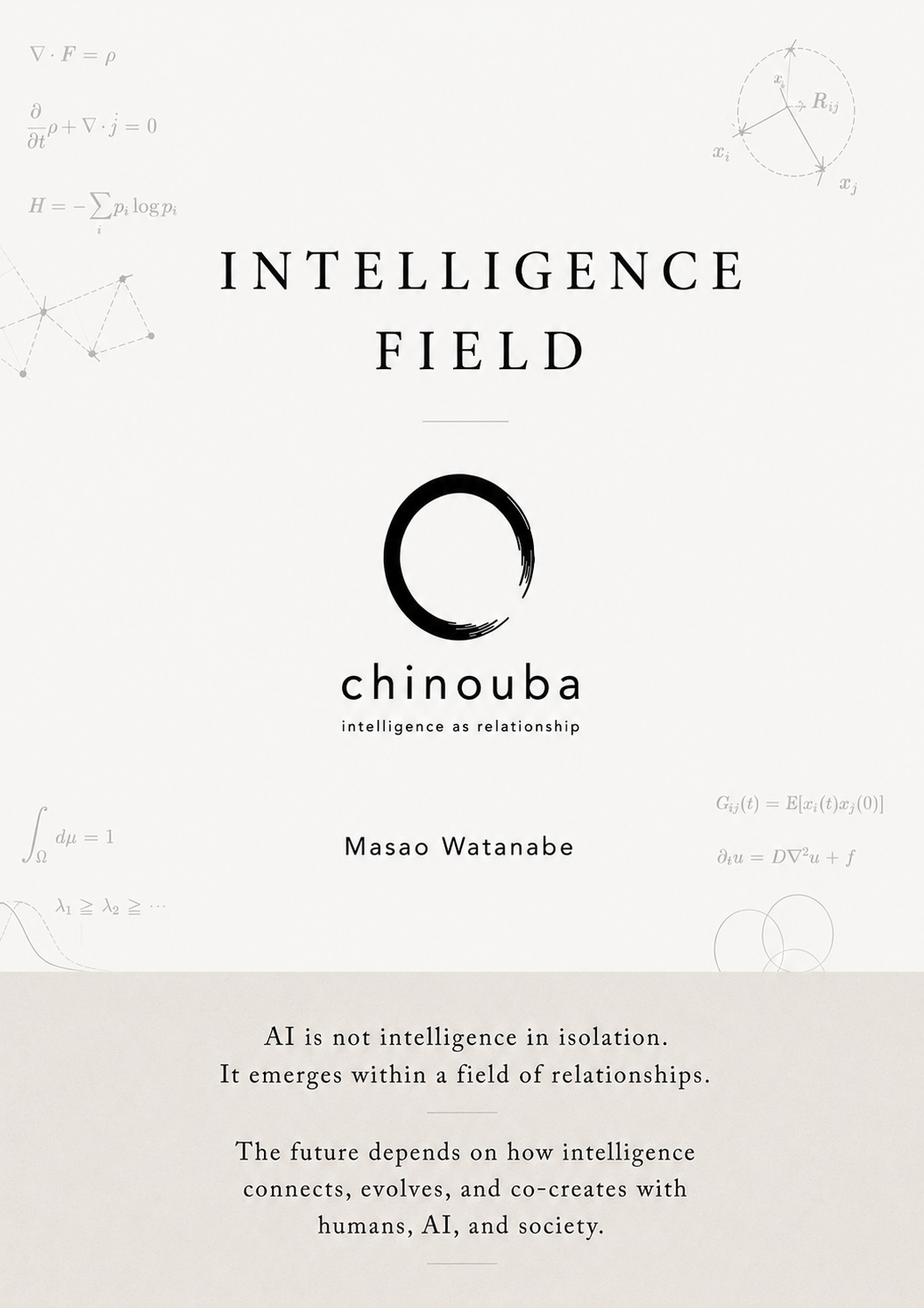
Intelligence Field
— Intelligence as Relationship —

A new perspective on AI, relational intelligence, and social intelligence fields.

Available on Kindle →
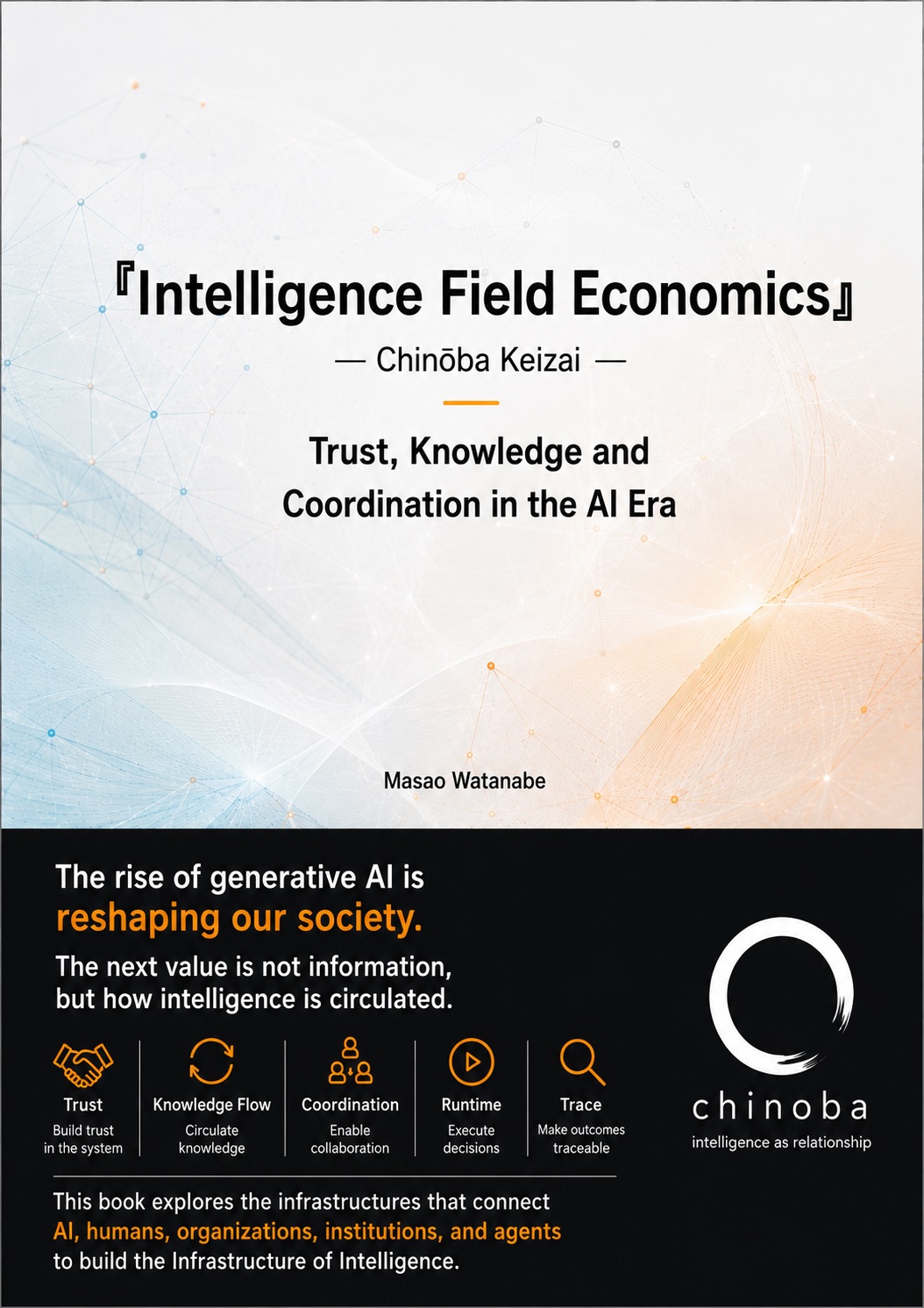
Intelligence Field Economics
— Chinōba Keizai —

Trust, Knowledge, and Coordination in the AI Era.

Available on Kindle →

Closing Statement

Intelligence emerges not from isolated intelligence, but from relationships, coordination, boundaries, and traceable decisions.
Chinoba.org