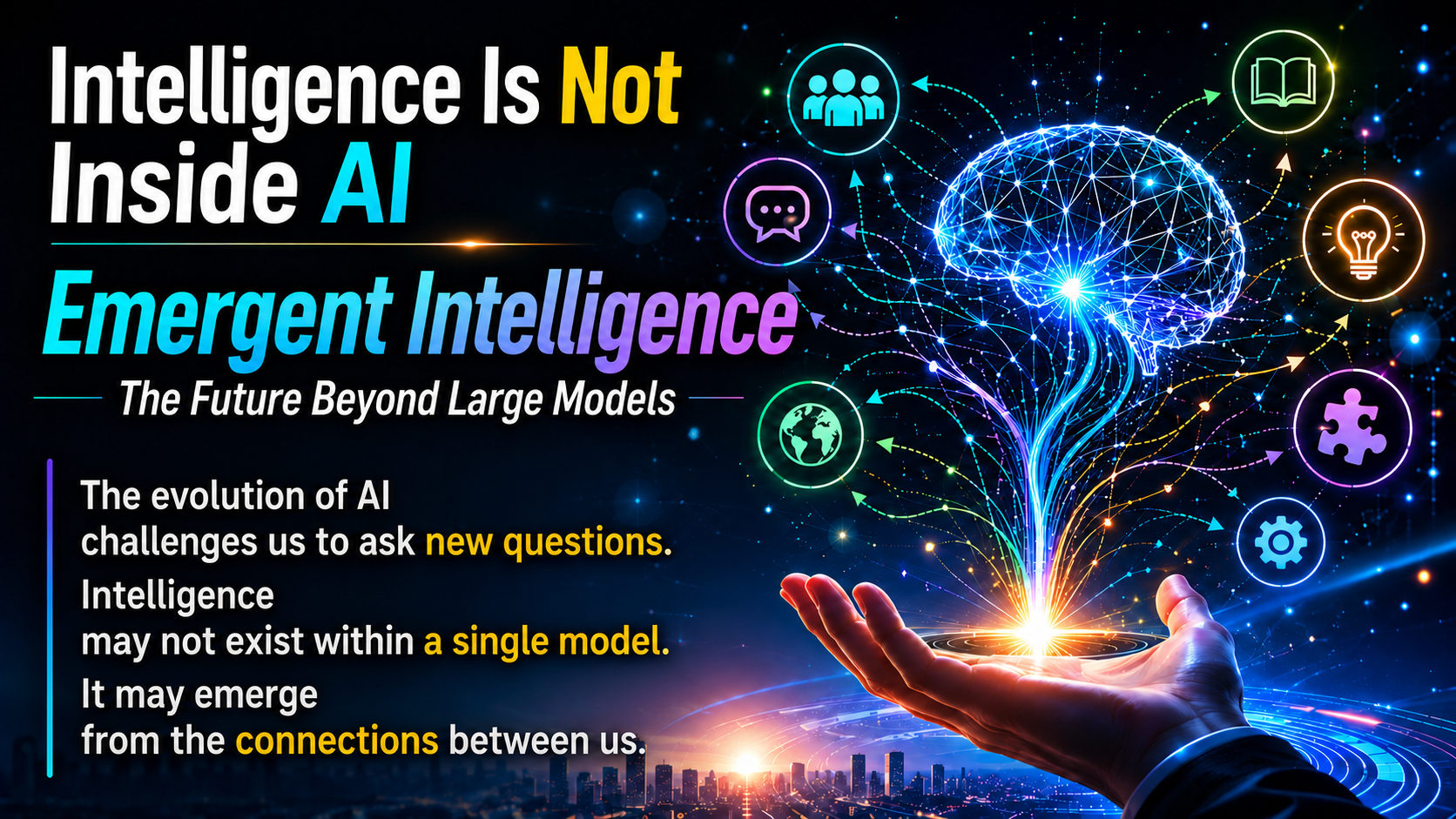
Intelligence is not always centralized. It often emerges from distributed relationships, coordination, and interaction.
This inquiry explores intelligence as an emergent property of networks, agents, organizations, knowledge flows, trust structures, and runtime coordination systems.
Enter Emergent & Distributed Intelligence through video and long-form texts — visual introductions and deeper explorations of emergent intelligence, human-AI coordination, collective intelligence, and distributed cognition in the age of AI.
Visual introductions to Emergent Intelligence and Distributed Intelligence — why the future of AI lies beyond the single model.
Long-form explorations of emergent intelligence, human-AI coordination, collective intelligence, and distributed cognition as the foundation of intelligence beyond the model.
A view of intelligence as a field — something that arises between agents, humans, organizations, and environments, not only inside any single one.
Emergent and Distributed Intelligence refers to intelligence that arises from:
Intelligence may not be located
in a single model.
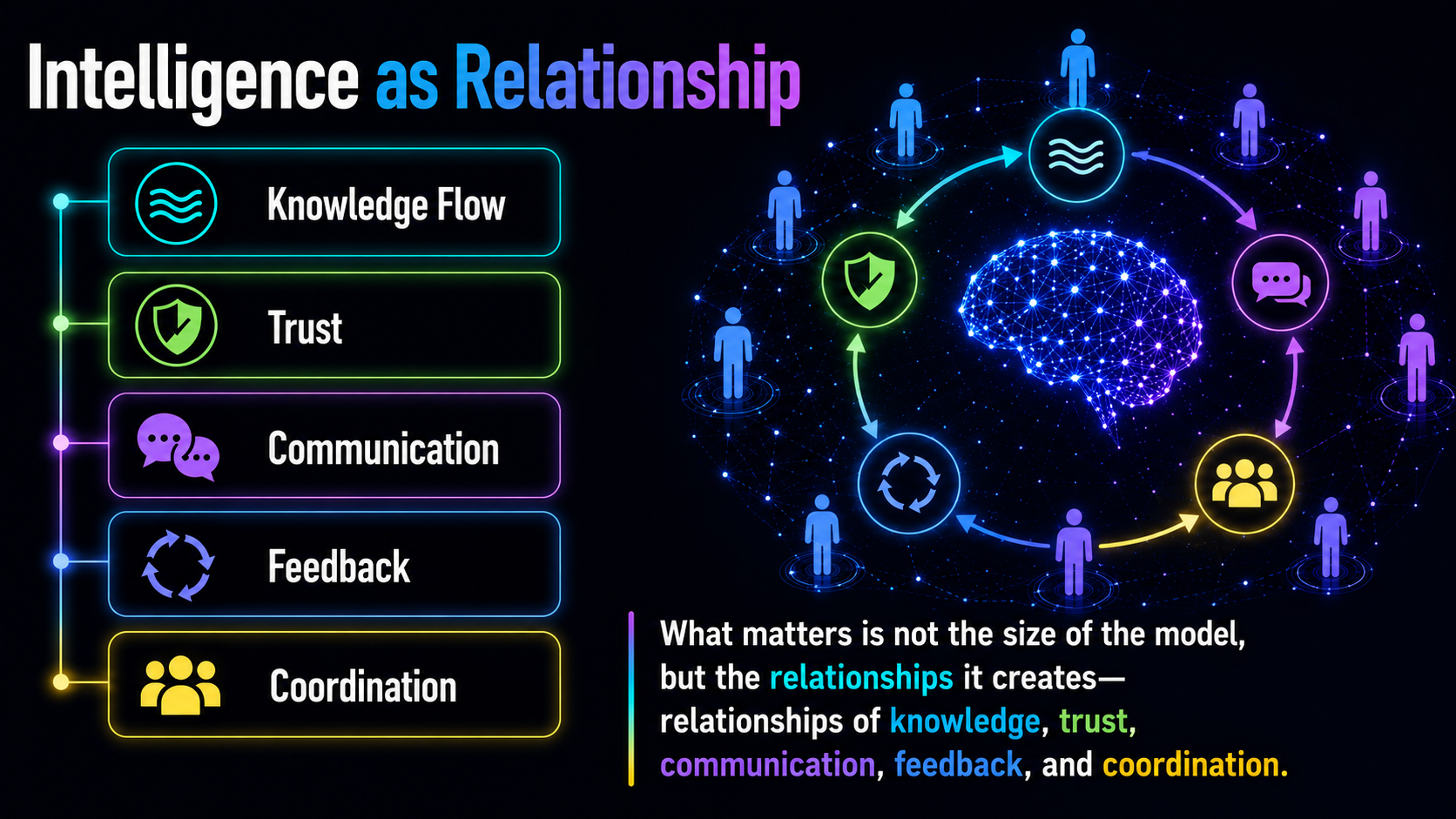
It may emerge from the structure of relationships among people, AI systems, organizations, and environments.
A field view treats intelligence as a property of the system, not only of its components. The substrate is the network itself — its couplings, feedbacks, memory, and trust.
Intelligence is what a connected
system does together.
This inquiry treats distributed intelligence as a relational layer for runtime coordination — where collective behavior, organizational learning, and multi-agent coordination become first-class objects of design.
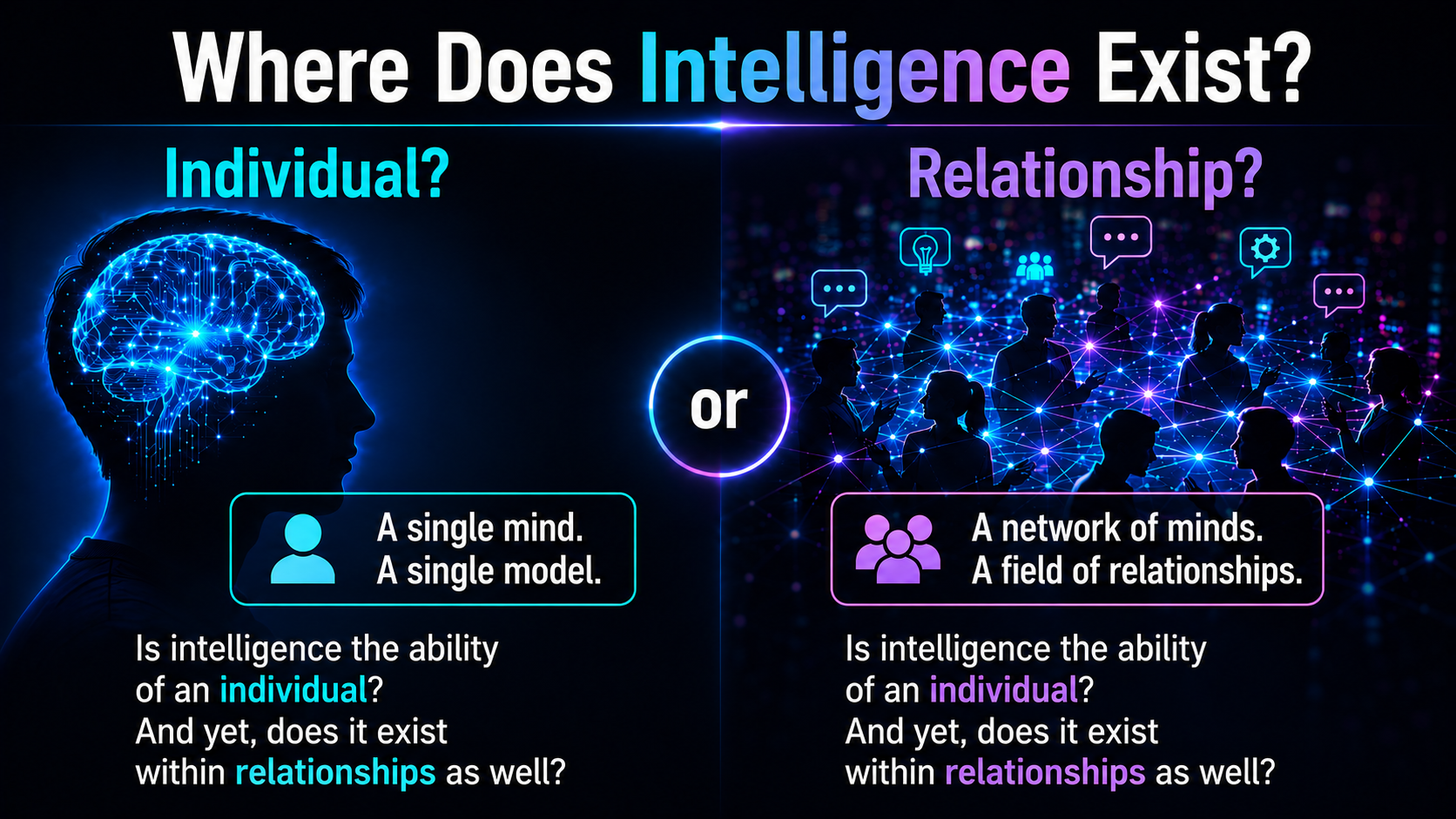
The same question drawn as a choice: is intelligence the property of a single mind or model, or of the relationships between many? A field view answers with the second — and treats the network of minds as where intelligence actually lives.
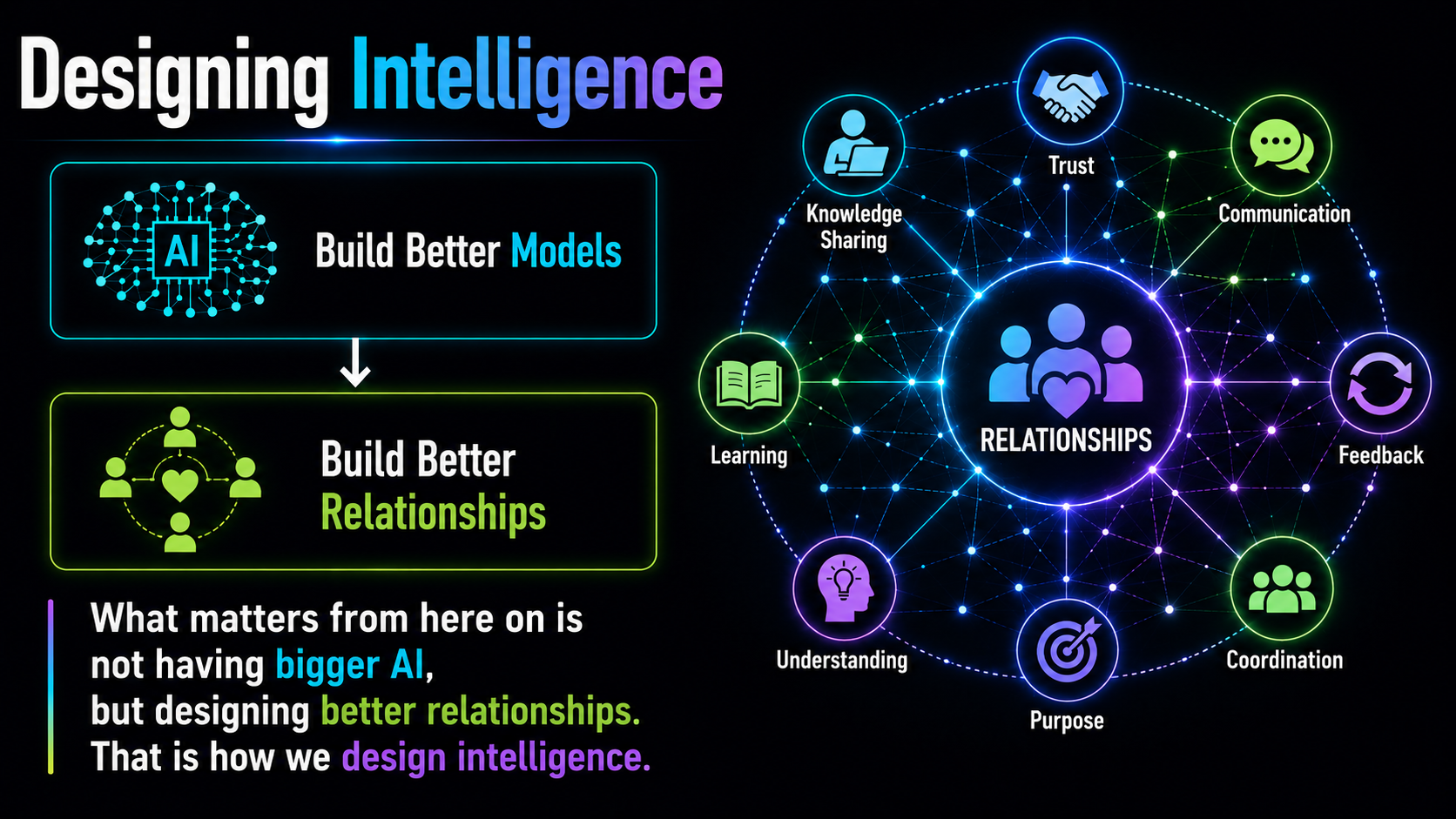
Most discourse still centers the model. Most working systems already depend on coordination, feedback, and distributed participation.
Most AI discourse still focuses on:
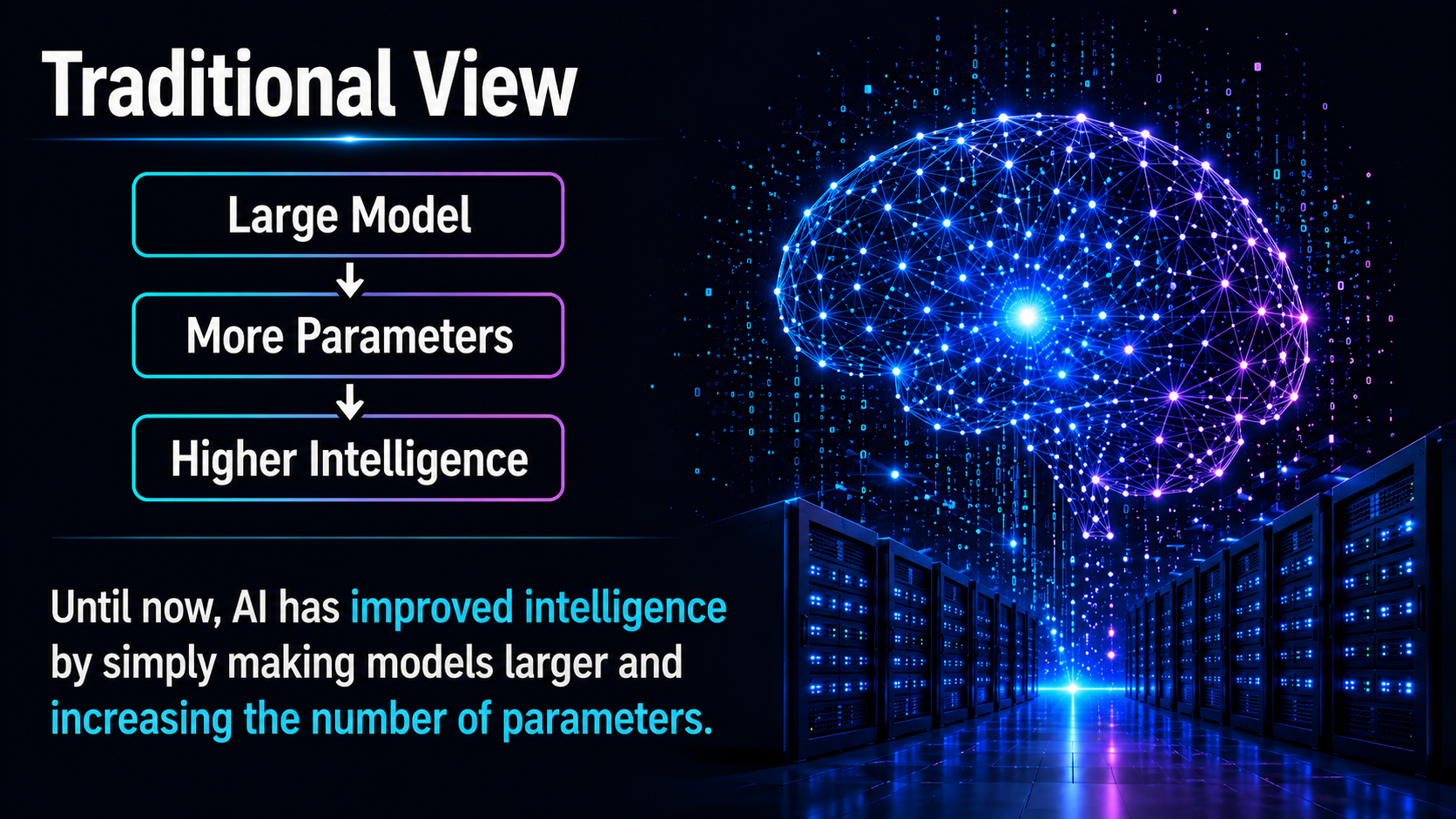
This frame treats intelligence as something to scale inside a single locus — a model, an agent, a system boundary.
But real-world intelligence often depends on:
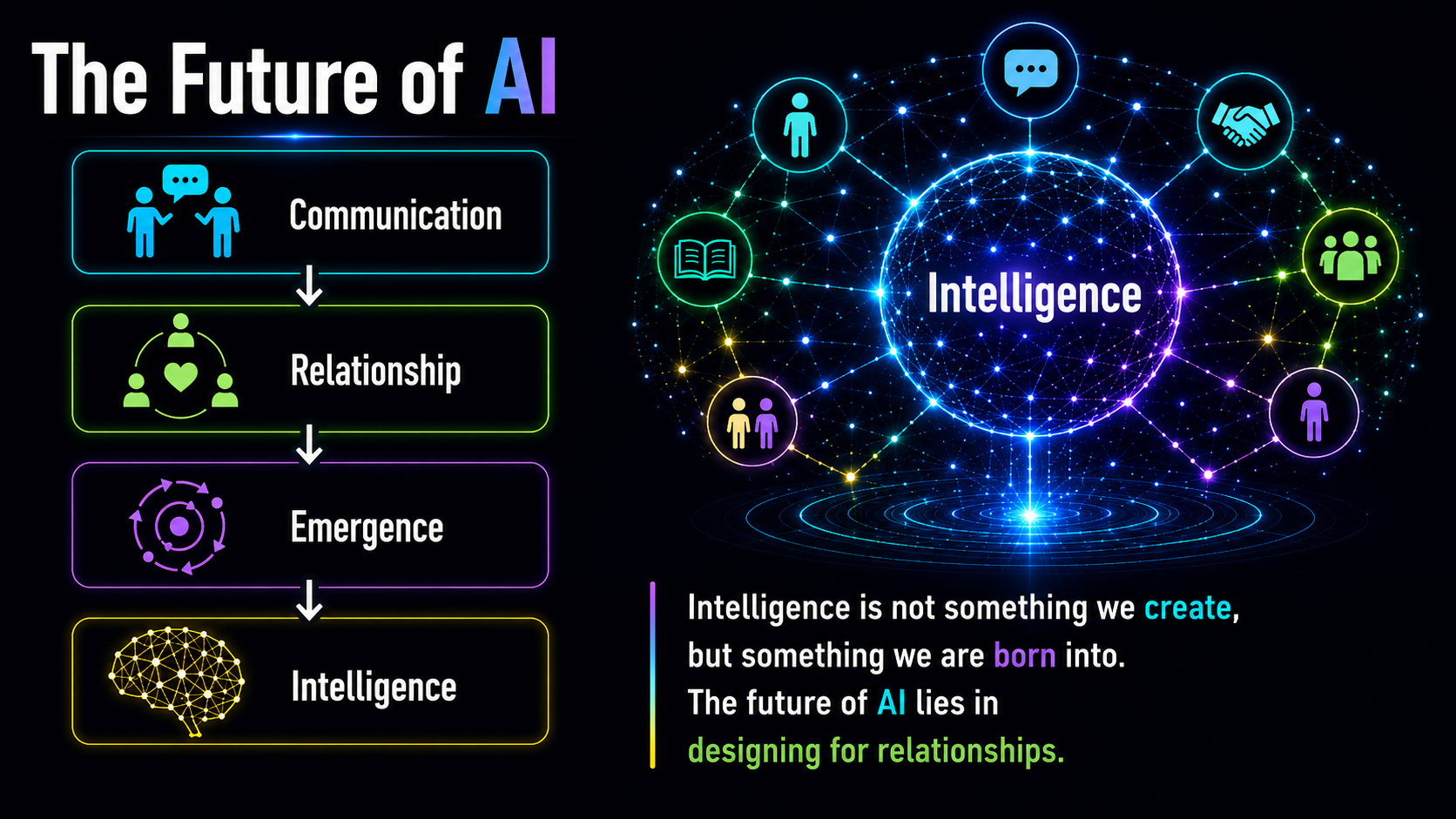
The future of AI may be less about
building one superintelligence,
and more about designing distributed
intelligence fields.
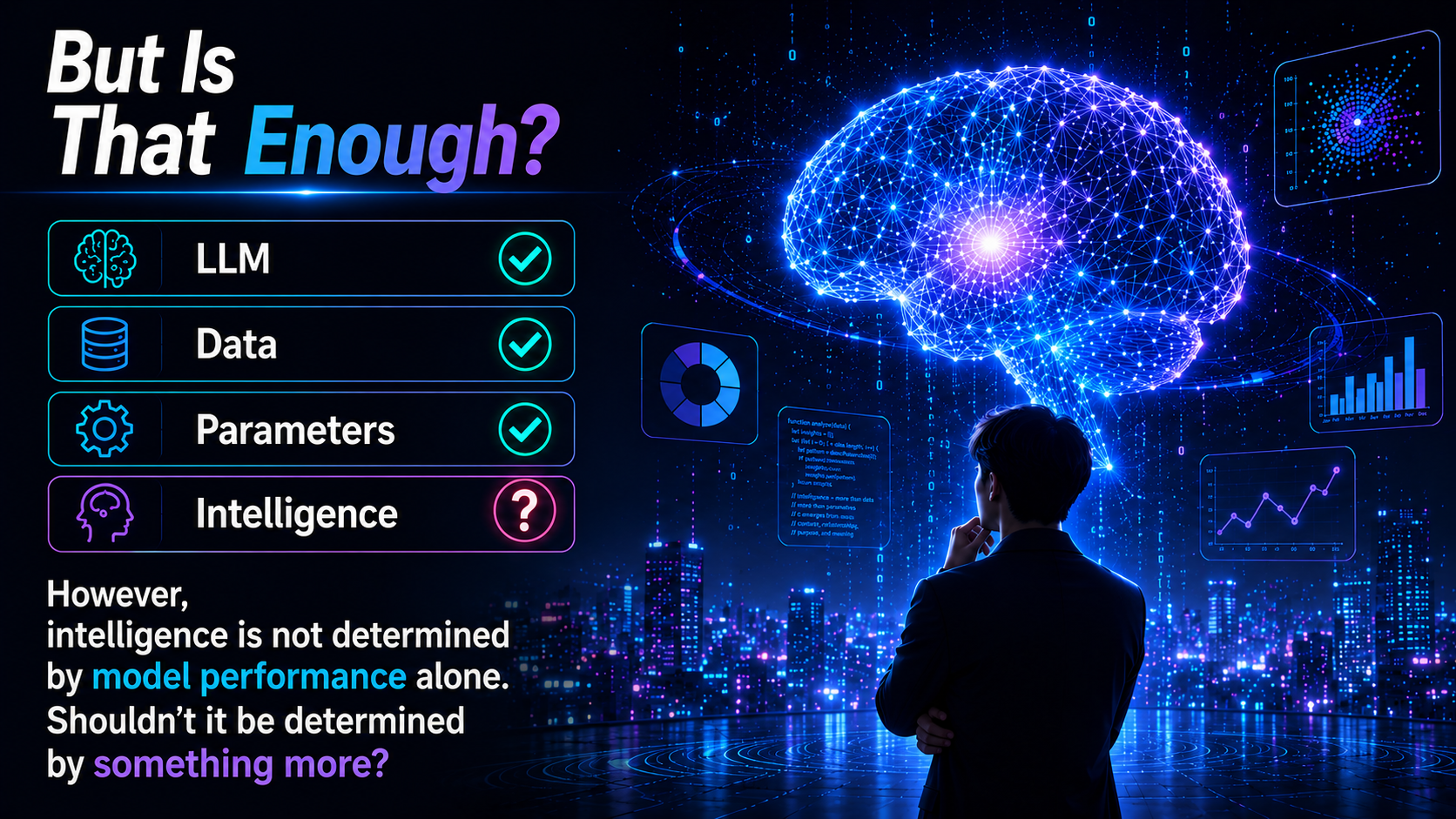
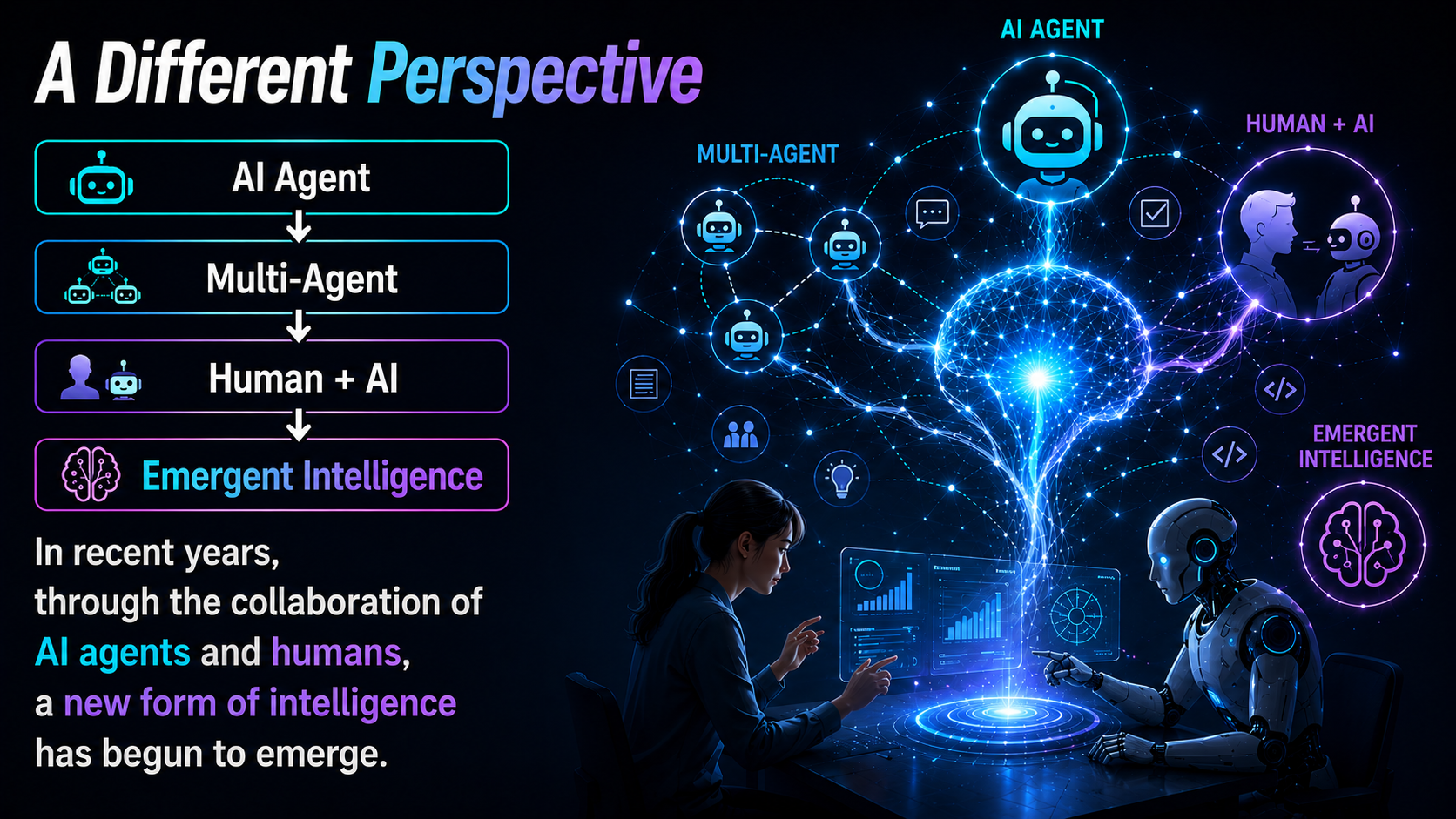
The shift in three movements — the model-centric view that scaled intelligence by adding parameters, the question of whether scale alone is enough, and the relational view in which intelligence arises between agents, humans, and knowledge.
Eight layers that compose a distributed intelligence field — from individual agents to runtime coordination and emergent collective behavior.
Multiple agents — human, AI, or hybrid — acting locally with their own state, scope, and partial view of the system.
Mixed networks in which humans and AI systems coordinate, escalate, and complement one another across decision contexts.
How signals, context, and meaning circulate across the field — the lived movement of knowledge between participants.
How reliability, reputation, and accountability travel through relationships — the relational currency of coordination.
Closed-loop dynamics that allow the system to sense its own behavior, correct, and converge — or diverge.
Learning that occurs at the level of the network — accumulated experience held by the field, not by any one node.
Live orchestration across agents, humans, and systems — the executable substrate on which distributed intelligence runs.
The whole — a continuous field of relationships, coordination, and meaning that no single participant fully contains.
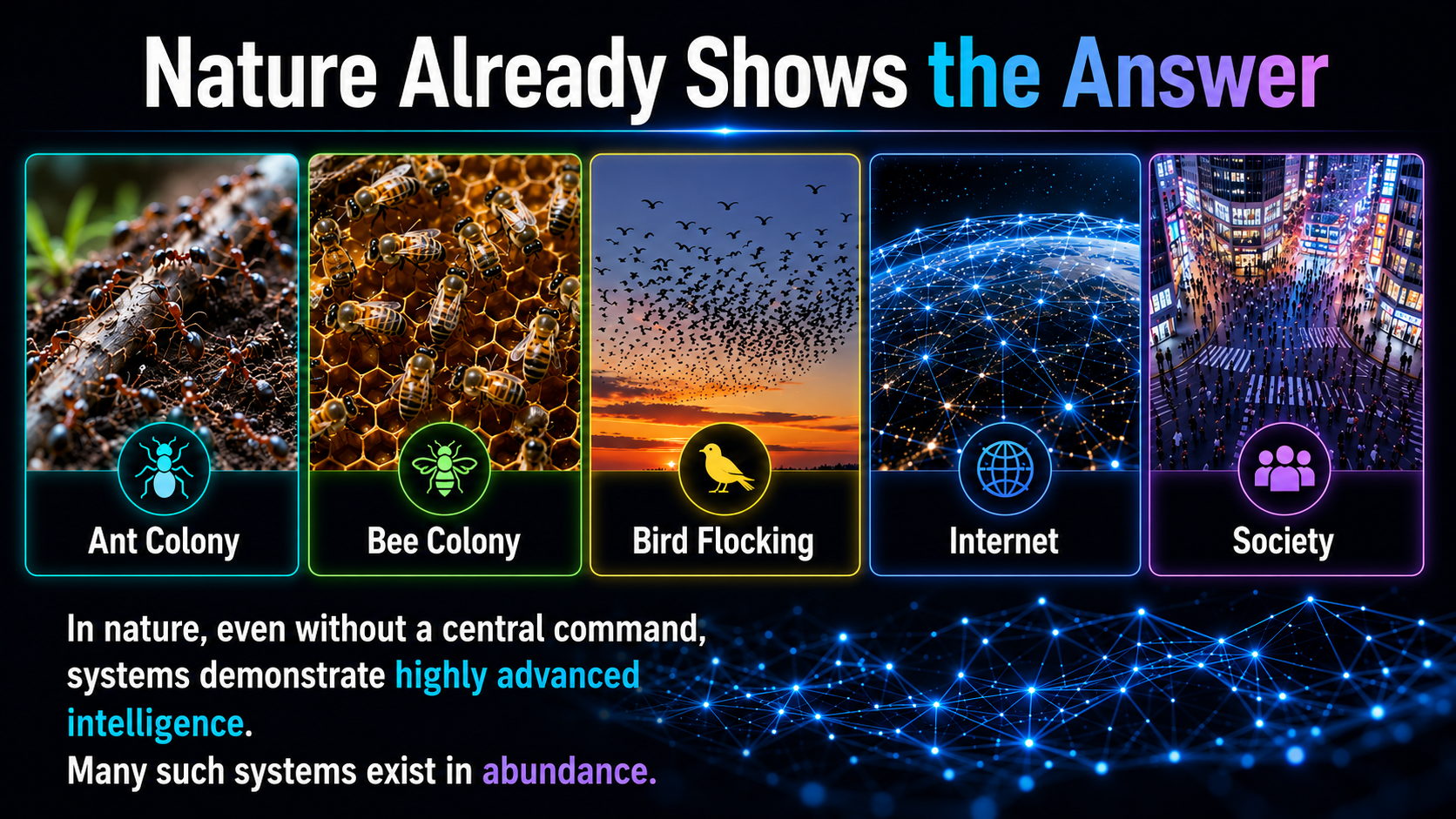
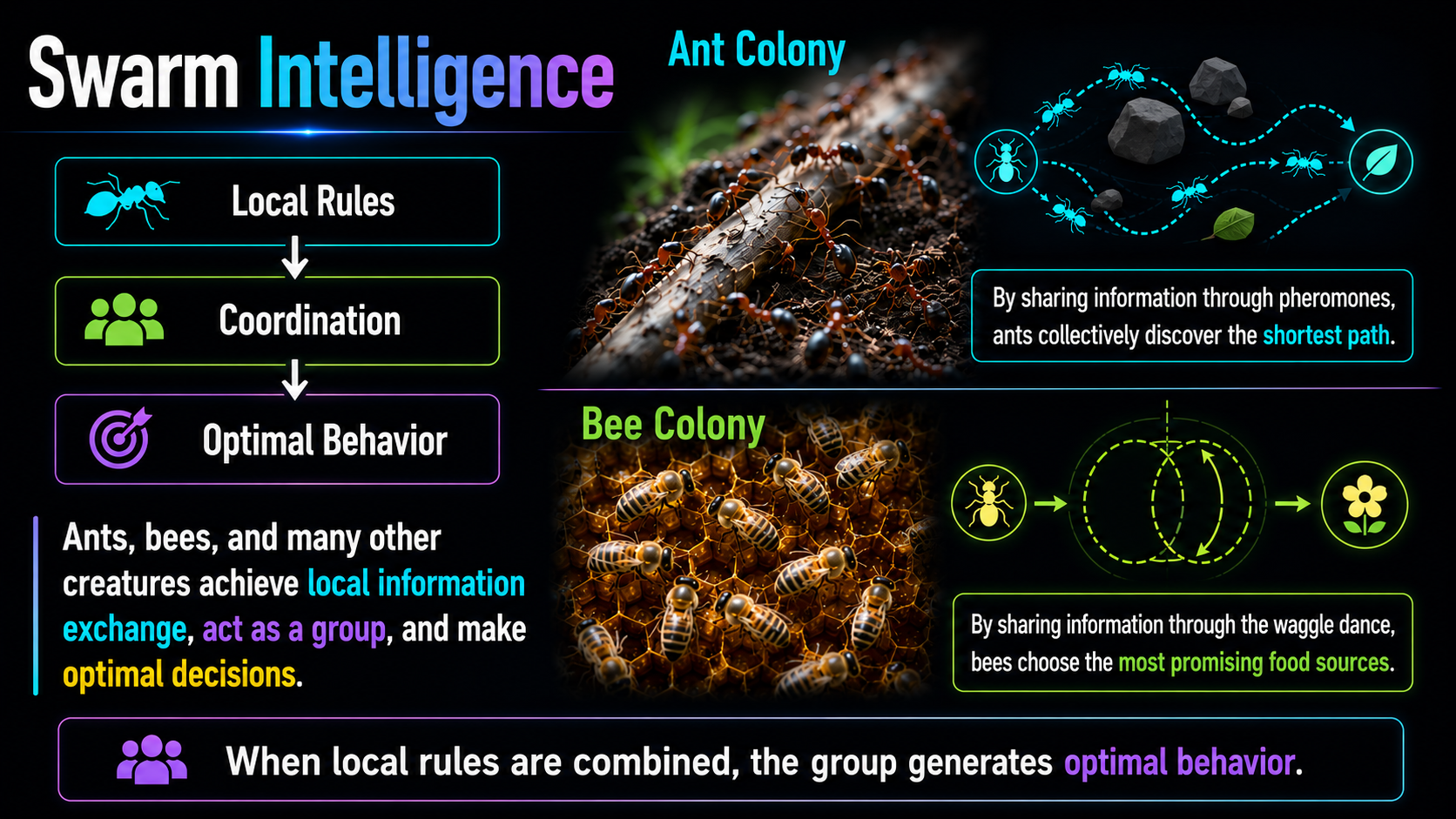
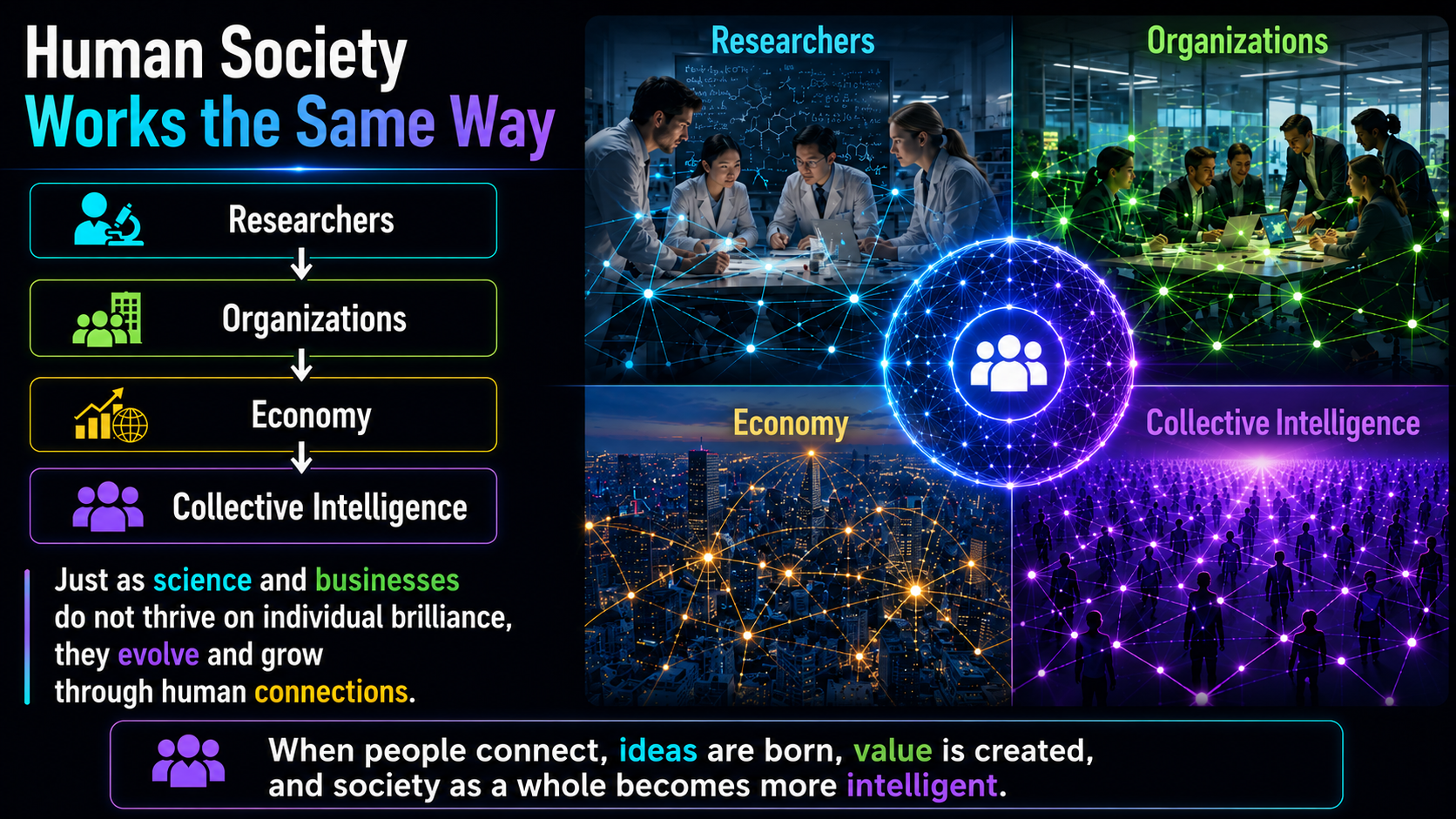
These eight layers do not describe something new. Distributed intelligence is the oldest pattern there is — it runs an ant colony, a swarm of bees, and a flock of birds long before any model existed. Local actors follow simple rules, exchange signals, and produce collective behavior no individual could plan. Human society works the same way: research, organizations, and economies grow through connection, not through any single mind.
Forthcoming essays that extend this inquiry into relational intelligence, distributed fields, and runtime coordination across agents and humans.
A foundational essay on intelligence as something that emerges from relationships rather than isolated entities.
A research note on distributed intelligence, coordination, and collective systems.
How multiple agents, humans, and organizations can form larger intelligence structures.
Why coordination, feedback, and runtime structures are essential for distributed intelligence.
Knowledge artifacts that compile the surrounding research into structured volumes. English editions shown here.
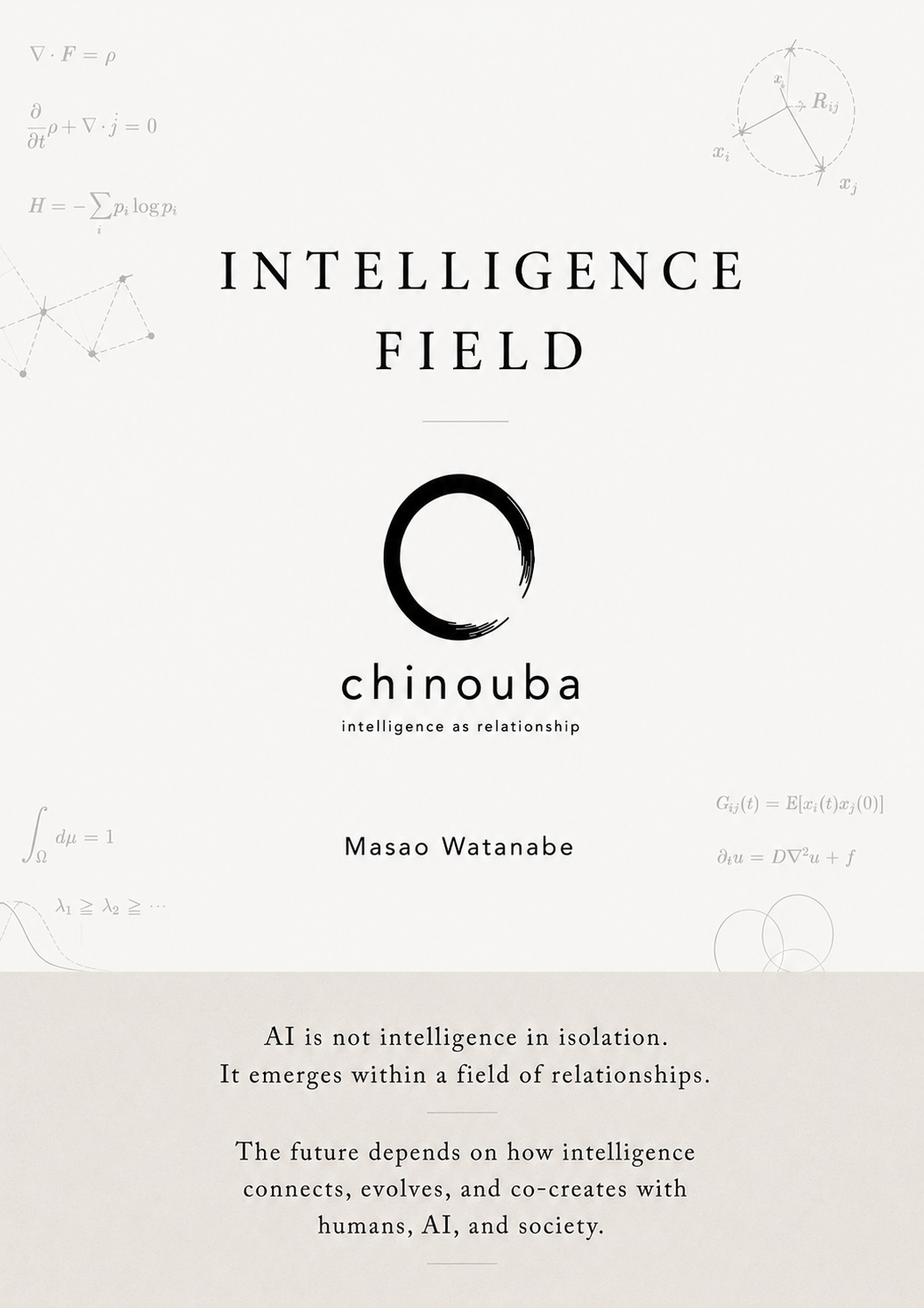
A foundational text on relational intelligence and the field within which distributed and emergent intelligence becomes meaningful.
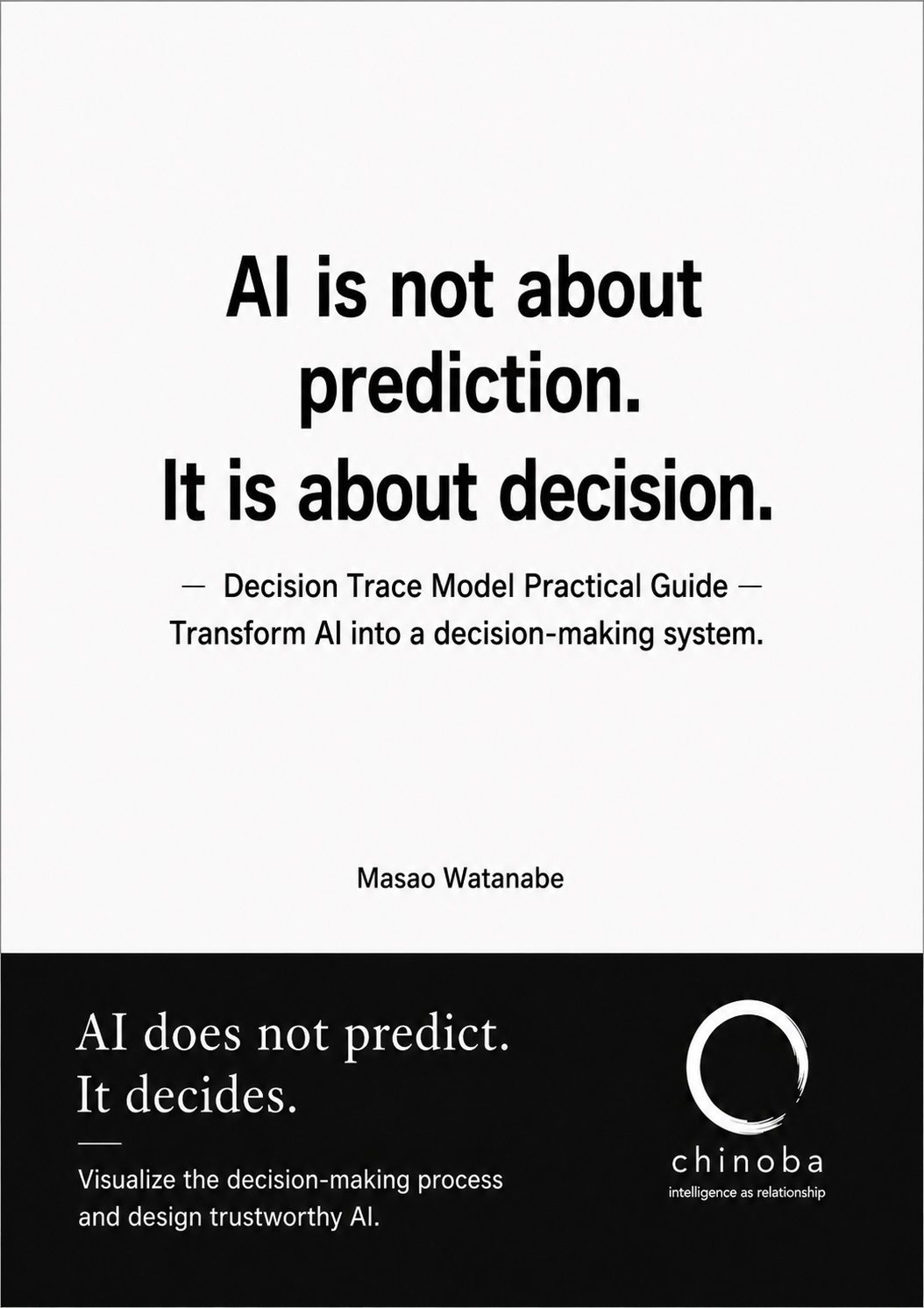
Available on Kindle →A frame for treating AI as a decision system — the conceptual ground from which runtime coordination and distributed decision structures inherit.
Available on Kindle →A practical guide for engineers and architects building decision systems on top of relational, traceable, and distributed structures.
Available on Kindle →Experimental runtime and graph-based systems for distributed intelligence, coordination, and organizational learning.
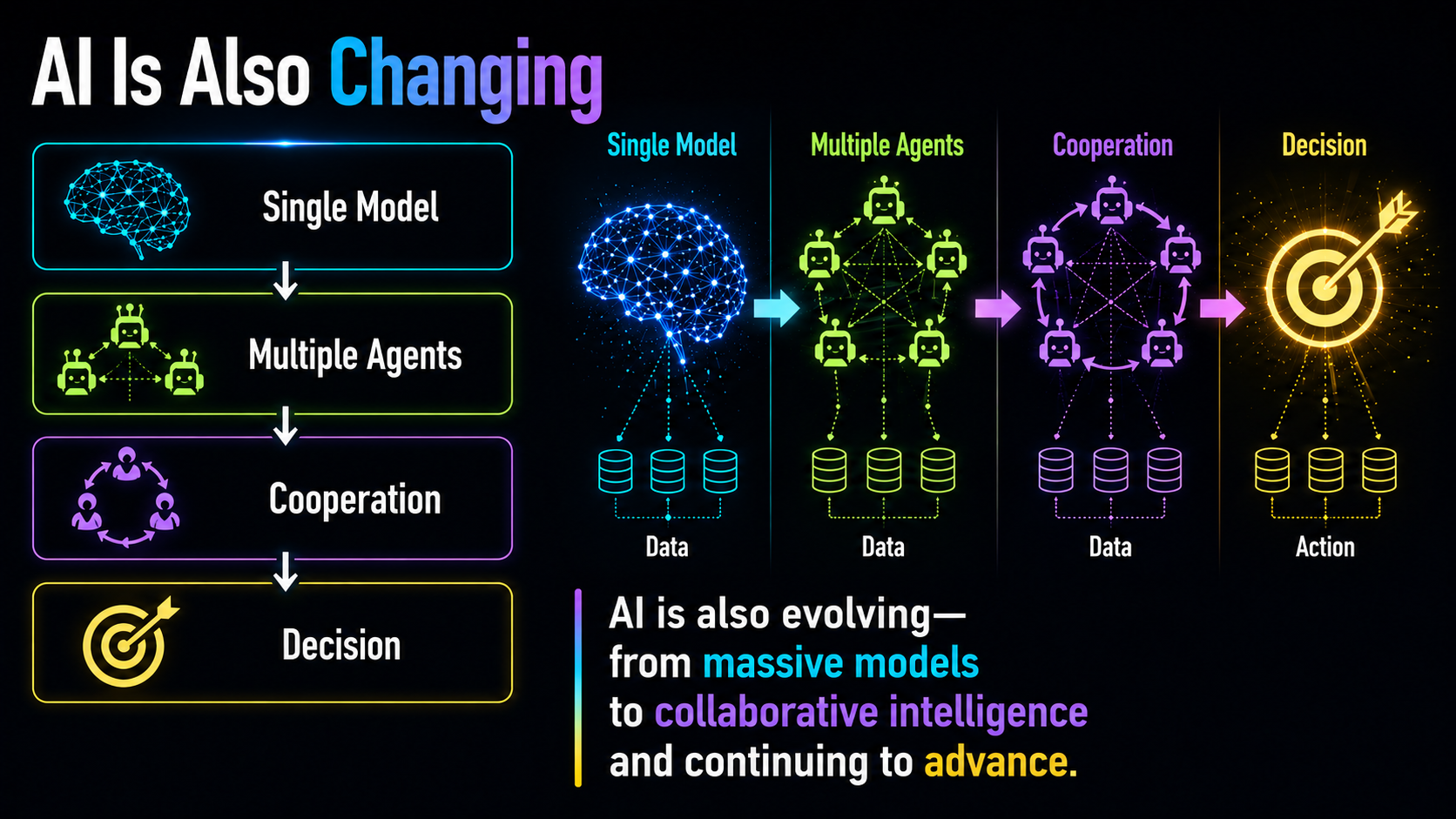
AI itself is moving along the same arc these primitives describe — from a single model toward multiple agents, cooperation, and shared decisions. The runtime is what carries that shift from massive models to collaborative intelligence.
A growing archive of architectural sketches for distributed intelligence fields, agent networks, and runtime coordination structures.
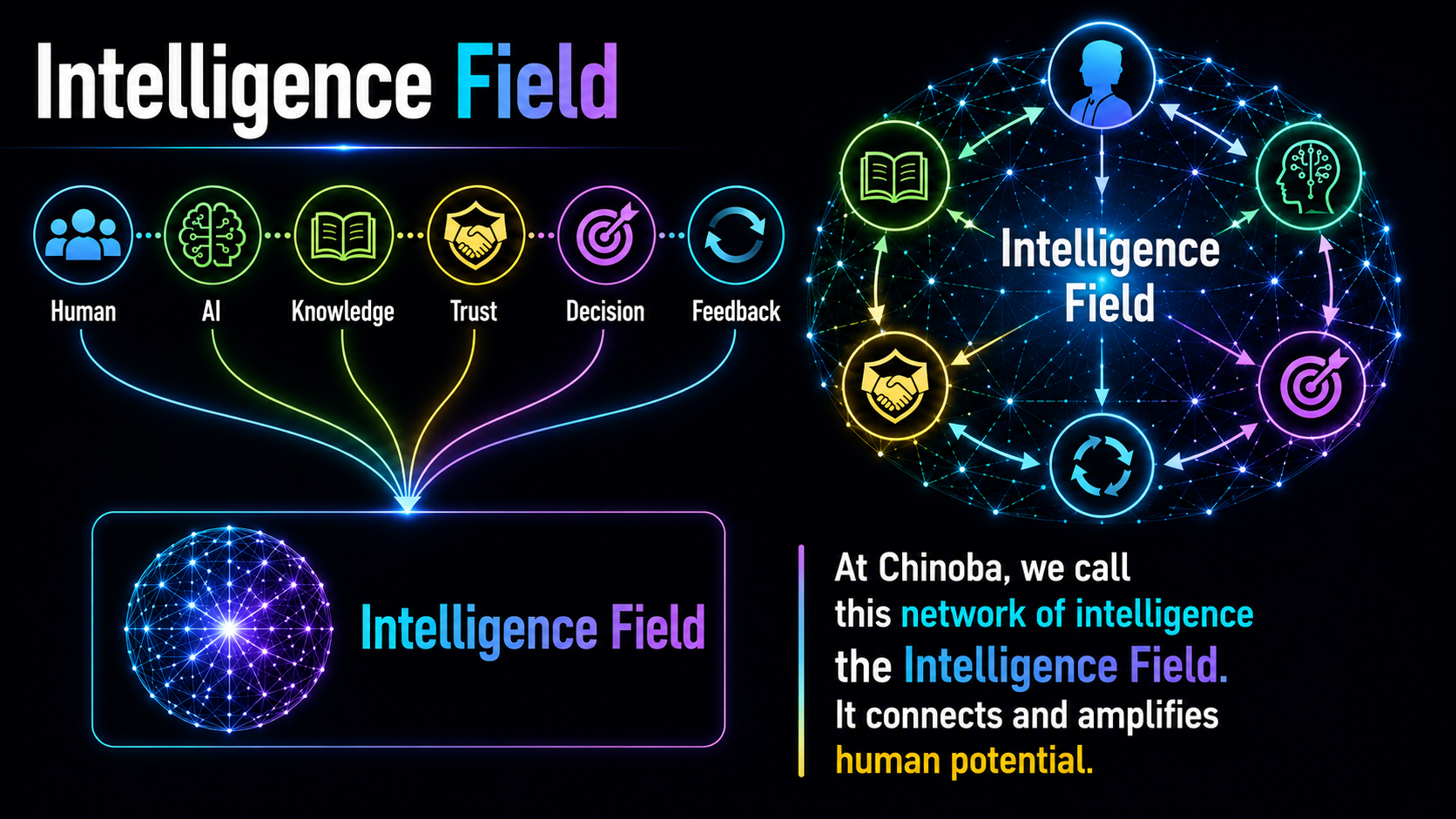
Human, AI, knowledge, trust, decision, and feedback converging into a single continuous intelligence field.
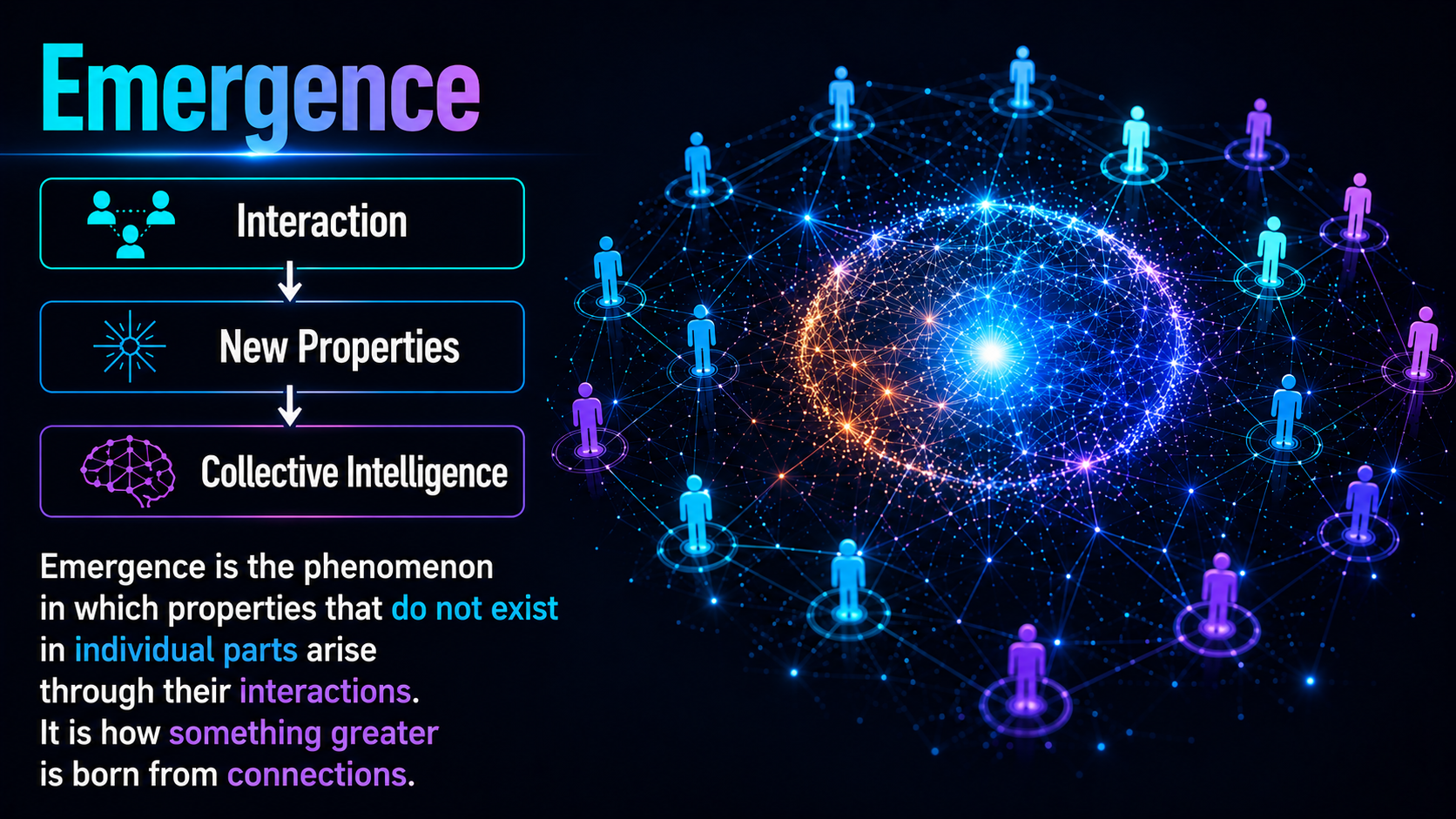
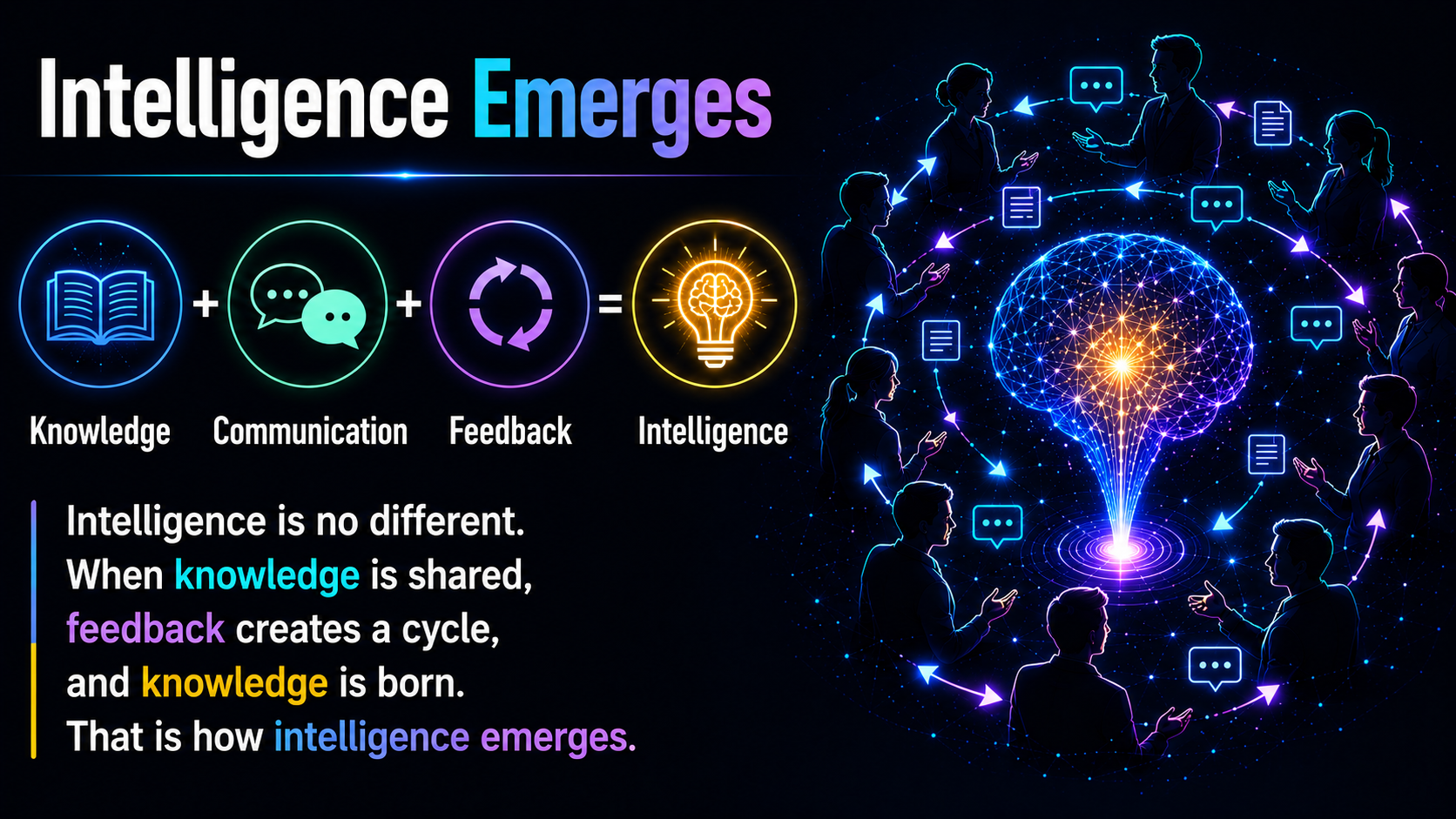
Interaction among many local actors giving rise to properties that no single participant holds.
Knowledge, communication, and feedback circulating among people until intelligence emerges.
Intelligence does not always begin inside a single mind, model, or machine. It can emerge from relationships, feedback, trust, coordination, and distributed decision structures.